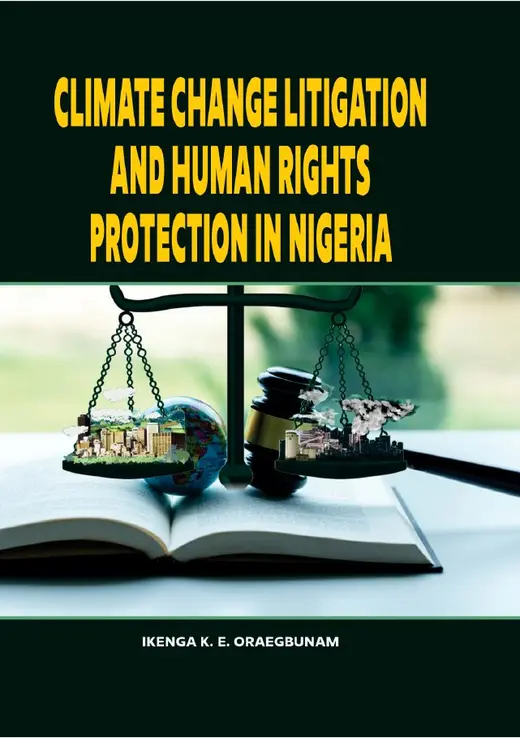
Opening the monograph…
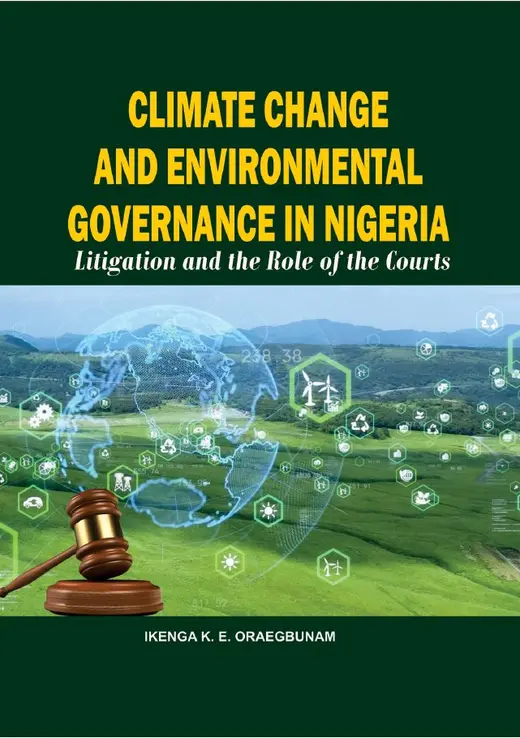
International & Environmental Law
Climate Change and Environmental Governance in Nigeria
Litigation and the Role of the Courts
About the monograph
The involvement of the courts is a significant force in shaping environmental governance in Nigeria. Although the country has not yet developed a large body of expressly climate-focused case law, related environmental and rights-based actions, particularly those concerning gas flaring, oil pollution, and the enforcement of constitutional and statutory duties have begun to influence regulatory behaviour, institutional accountability, and policy development. Drawing on the leading case law such as Gbemre v Shell and Centre for Oil Pollution Watch v NNPC, as well as the statutory framework established by the Climate Change Act 2021, this study examines how litigation interacts with Nigeria's environmental governance system. It also situates Nigerian developments within selected comparative judicial experiences, including Urgenda Foundation v Netherlands, Leghari v Federation of Pakistan, and Earthlife Africa v Minister of Environmental Affairs, to illustrate how courts elsewhere have shaped climate policy and clarified state obligations. The analysis finds that climate-related litigation in Nigeria has contributed to the articulation of environmental rights, exposed persistent regulatory weaknesses, and opened pathways for policy and legislative reform. However, its transformative potential remains constrained by structural barriers such as limited standing, weak enforcement, institutional fragmentation, and political resistance in the extractive sector. The work concludes that strengthening the governance impact of climate litigation will require reforms to enhance judicial capacity, broaden access to justice, improve regulatory coordination, and integrate judicial outcomes into coherent climate and environmental policy frameworks.
Cite this book
Ikenga K. E. Oraegbunam, Climate Change and Environmental Governance in Nigeria: Litigation and the Role of the Courts (TETFund Academic Publishing Centre, Nnamdi Azikiwe University, 2026), ISBN 978-978-63773-5-3.
Free preview
First 4 pagesLoading page…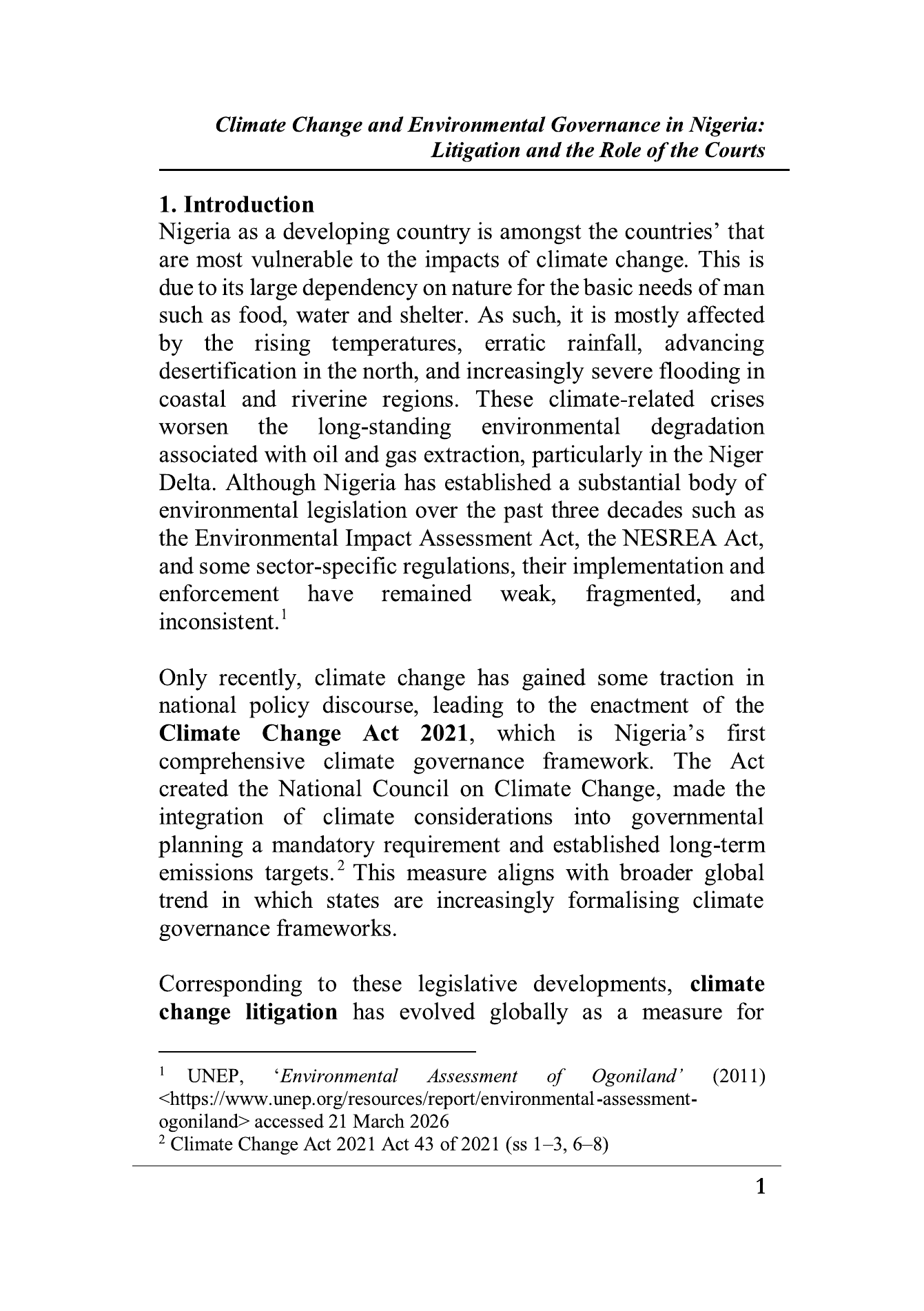
Loading page…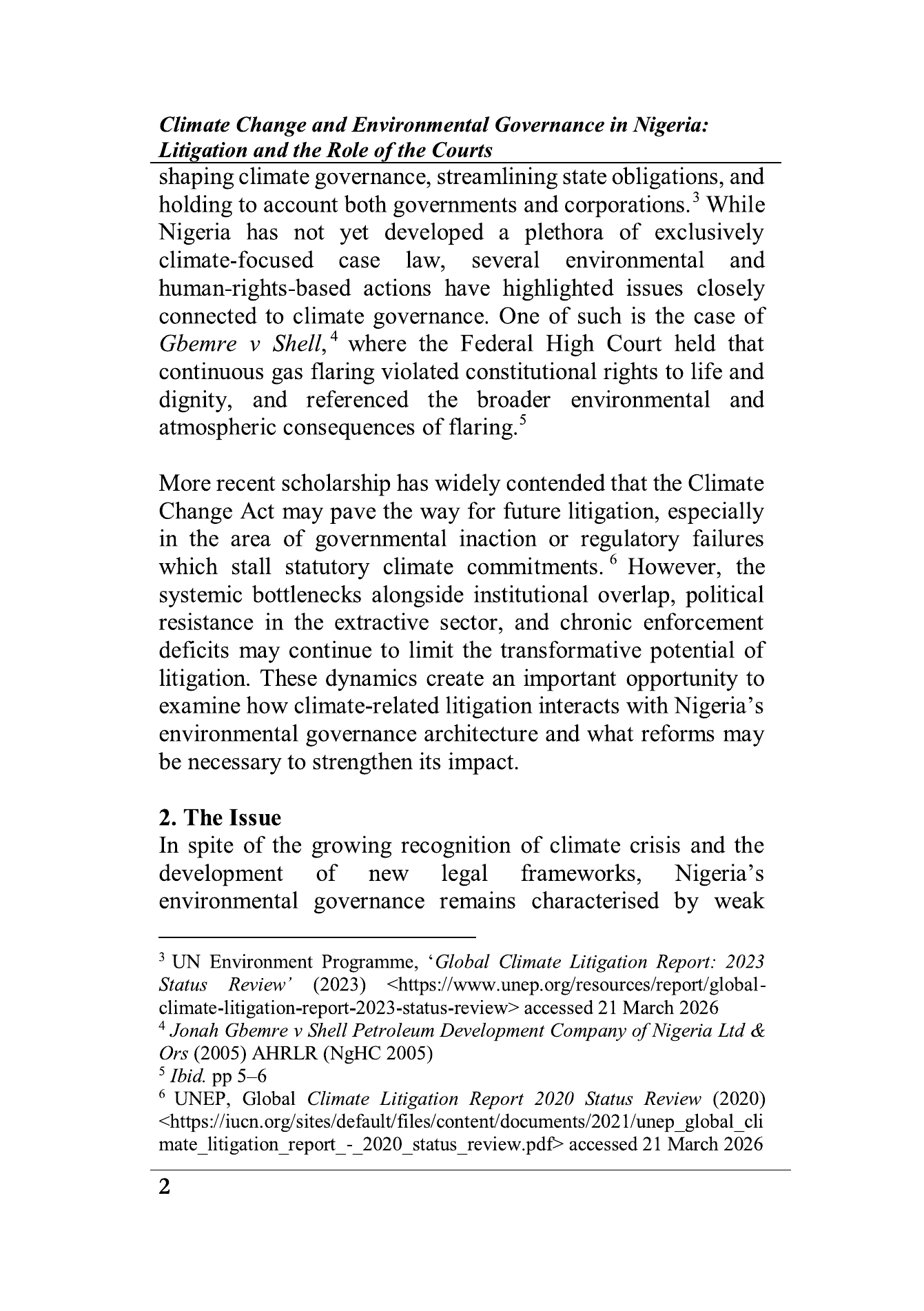
Loading page…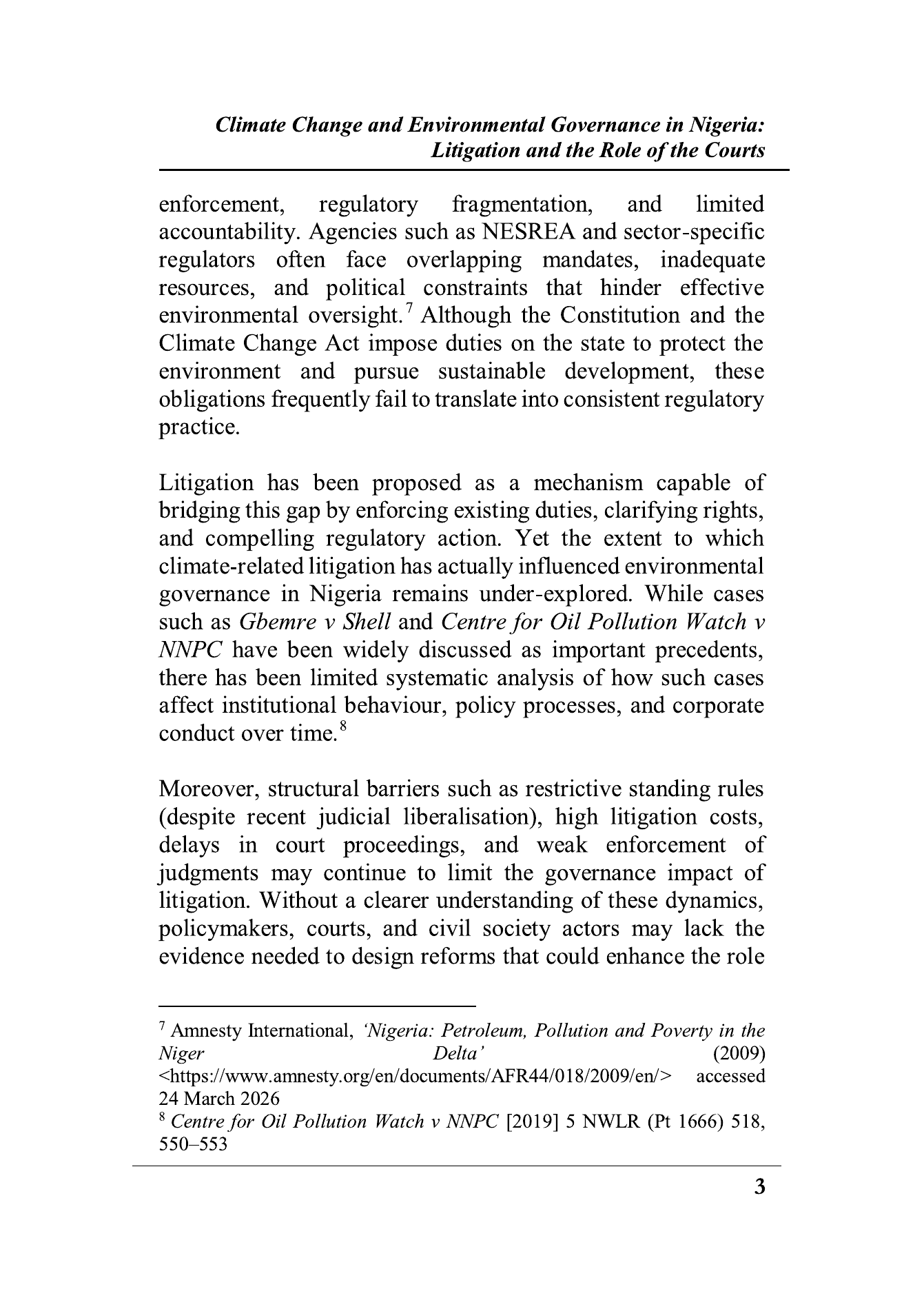
Loading page…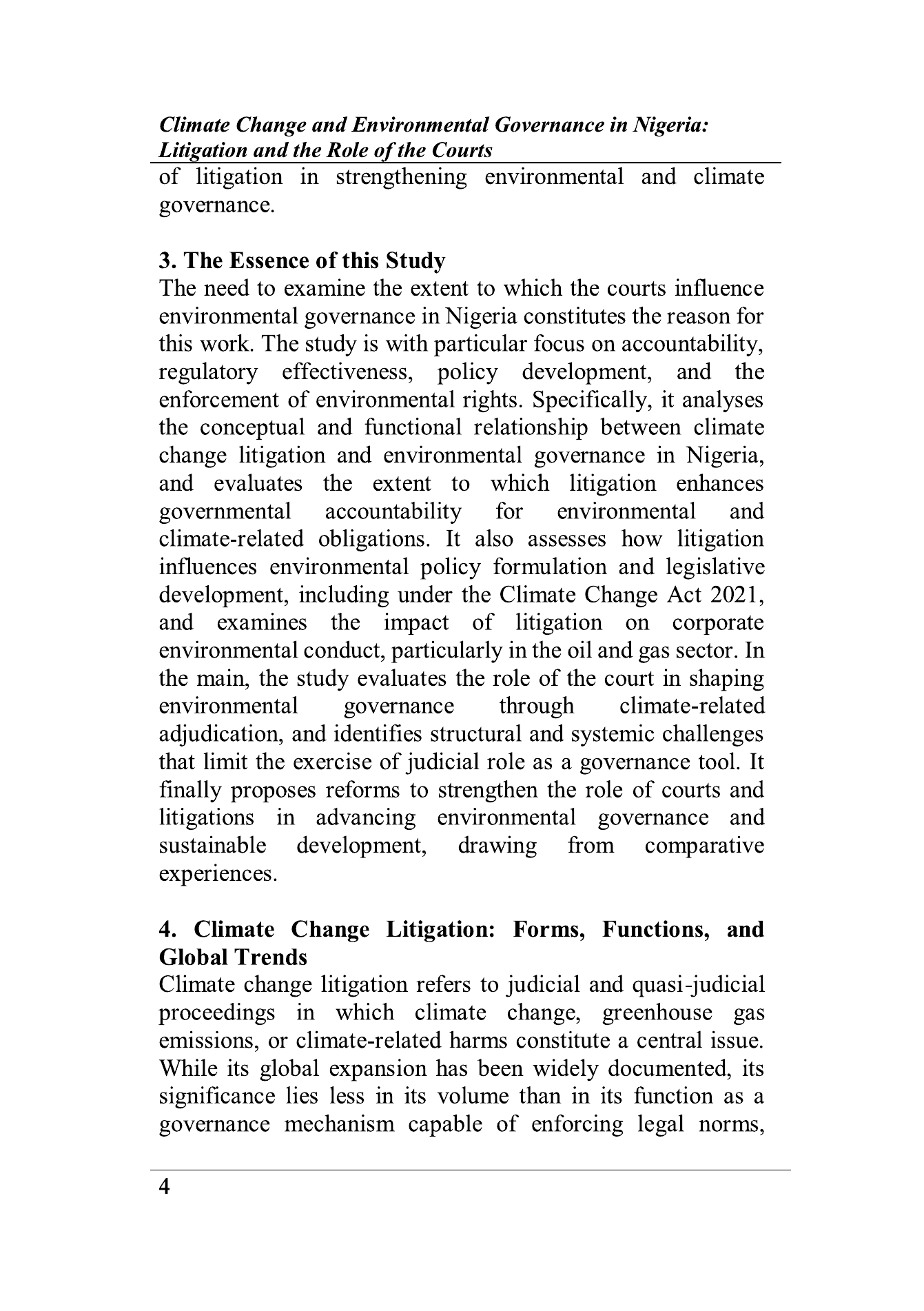
Keep reading
That was the free preview. 34 more pages in the full monograph, yours as a PDF for ₦7,000.