Opening the monograph…
Technology, Cyber & AI
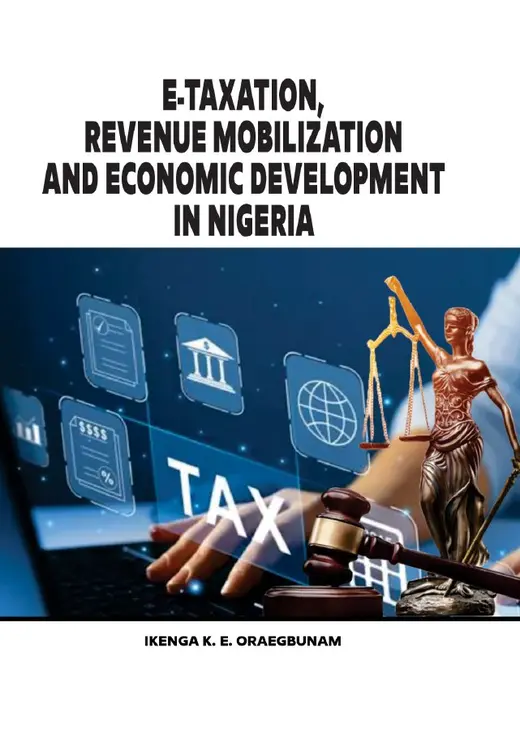
E-Taxation, Revenue Mobilization and Economic Development in Nigeria
About the monograph
The transition from manual to electronic tax administration marks a critical turning point for Nigeria's fiscal policy. Historically, the Nigerian economy was characterized by an overwhelming dependence on volatile oil revenues, which led to the underdevelopment of the non-oil tax sector. The ongoing shift toward digital taxation represents a strategic effort to stabilize the economy and build a more resilient, modern financial system. This study critically evaluates the comprehensive impact of electronic taxation (e-taxation) on revenue mobilization and economic development in Nigeria. It specifically traces the evolution of digital tax infrastructure from the Integrated Tax Administration System (ITAS) to the revolutionary TaxPro-Max platform, examining their integration and consolidation under the newly enacted Nigeria Tax Act 2025 and Nigeria Tax Administration Act 2025. Adopting a legal approach, the work relies on the analytical review of statutory frameworks, primary legal texts, and administrative data to examine how the digitization of core tax processes—registration, filing, and payment—has influenced macroeconomic stability. The study reveals a profound, positive correlation between technological adoption and revenue growth, evidenced by a surge in total tax collections from 8450.5 billion in 1999 to a record-breaking N28.3 trillion in 2025. Despite this success, the study identifies several critical structural and legal barriers hindering the system's ultimate potential. These include a widening digital divide between large corporations and small-to-medium enterprises, significant infrastructural deficits in rural areas, and ongoing constitutional tensions regarding fiscal federalism. Furthermore, an analysis of landmark judicial decisions, such as TSKJ v FIRS and Accugas v FIRS, highlights the continuing legal struggles to clearly define the boundaries of administrative power and the precise jurisdiction of the Tax Appeal Tribunal. To fully harness the economic potential of e-taxation, the study recommends the urgent development of a harmonized legal framework that definitively resolves existing jurisdictional conflicts between federal and state tax authorities. Additionally, the government must invest heavily in bridging the rural infrastructural gap and improving digital literacy among small business owners. Finally, there must be a strict, consistent application of constitutional principles to foster an equitable, predictable, and highly efficient tax environment.
Cite this book
Ikenga K. E. Oraegbunam, E-Taxation, Revenue Mobilization and Economic Development in Nigeria (TETFund Academic Publishing Centre, Nnamdi Azikiwe University, 2026), ISBN 978-978-8590-43-9.
Free preview
First 4 pagesLoading page…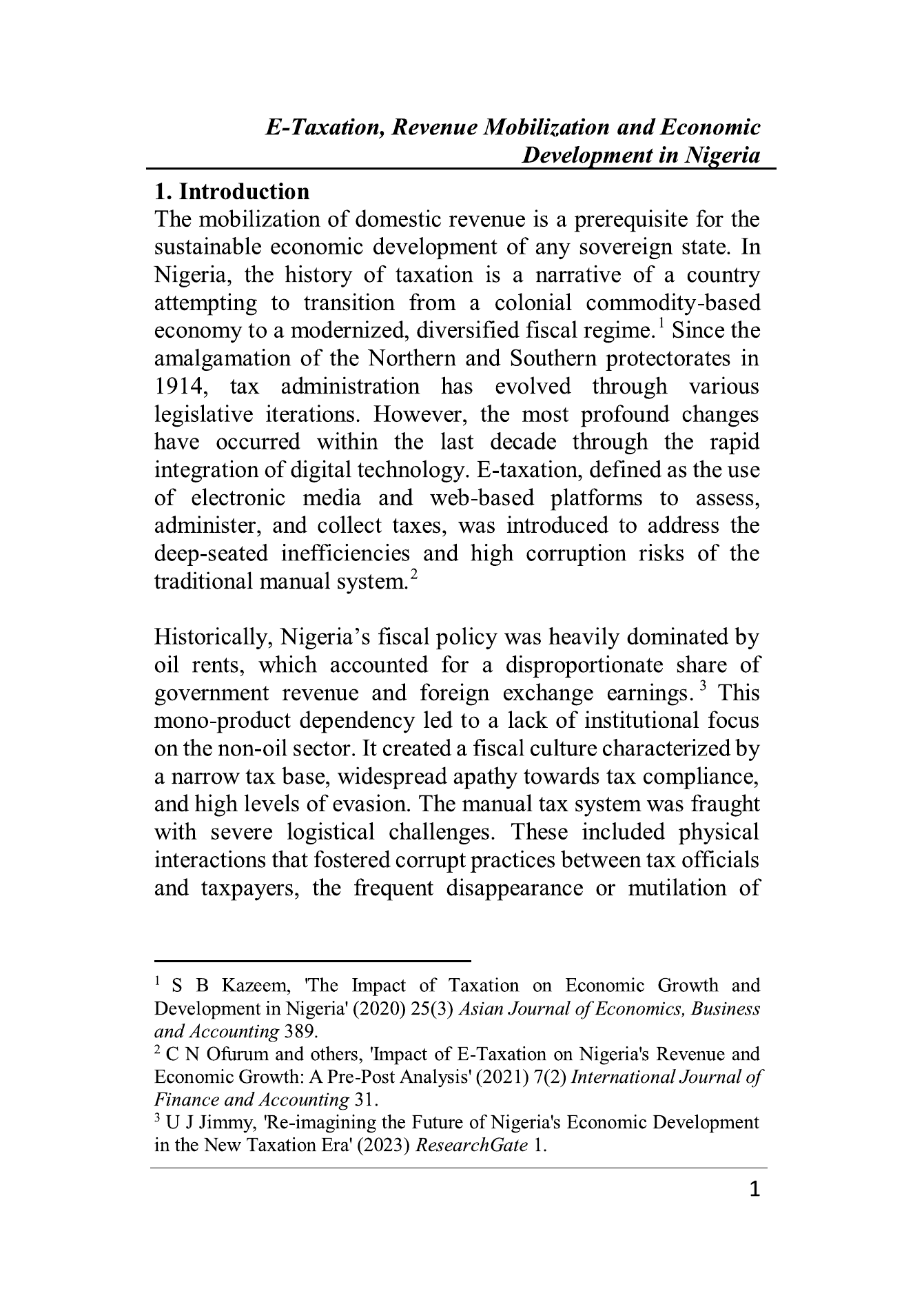
Loading page…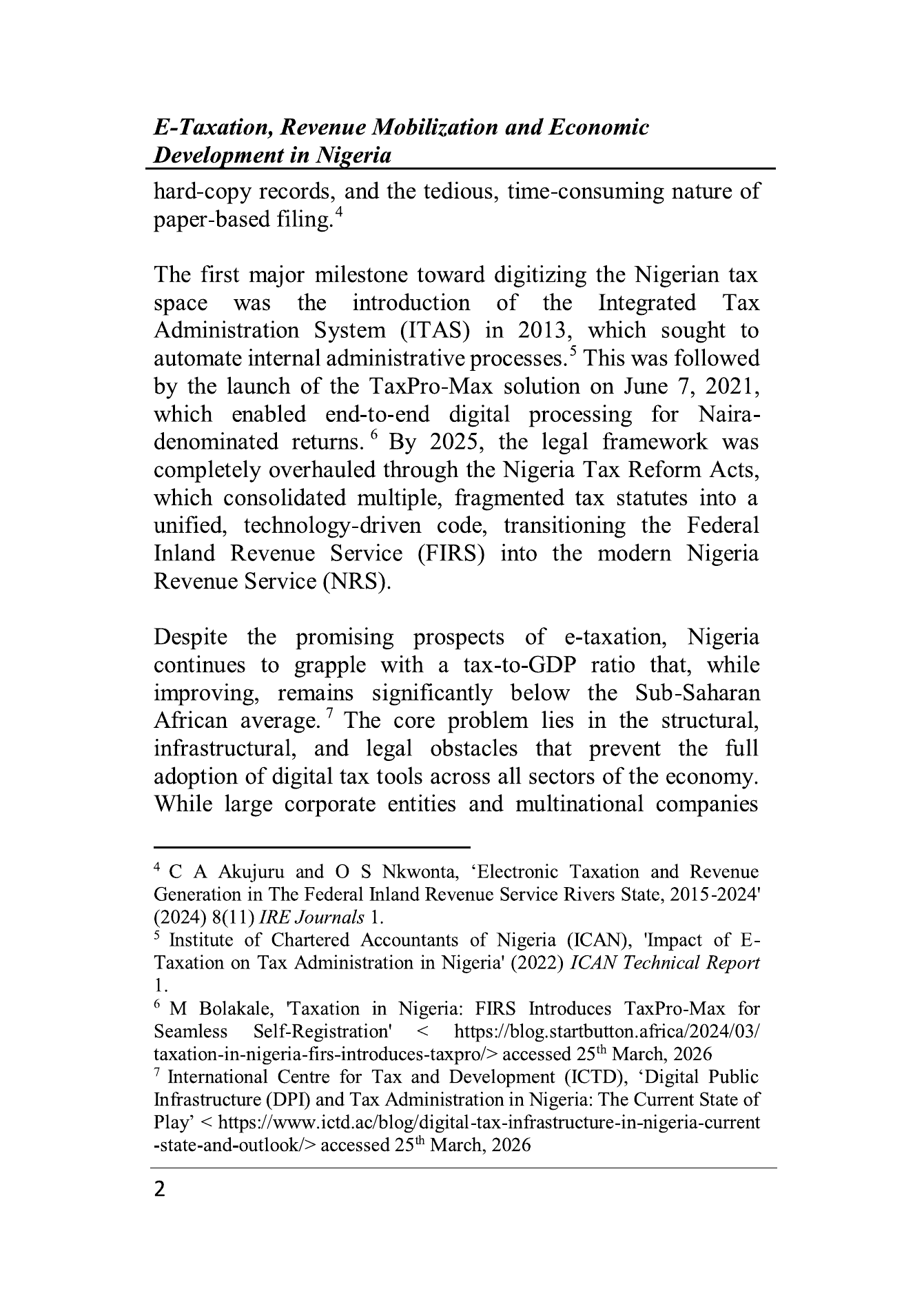
Loading page…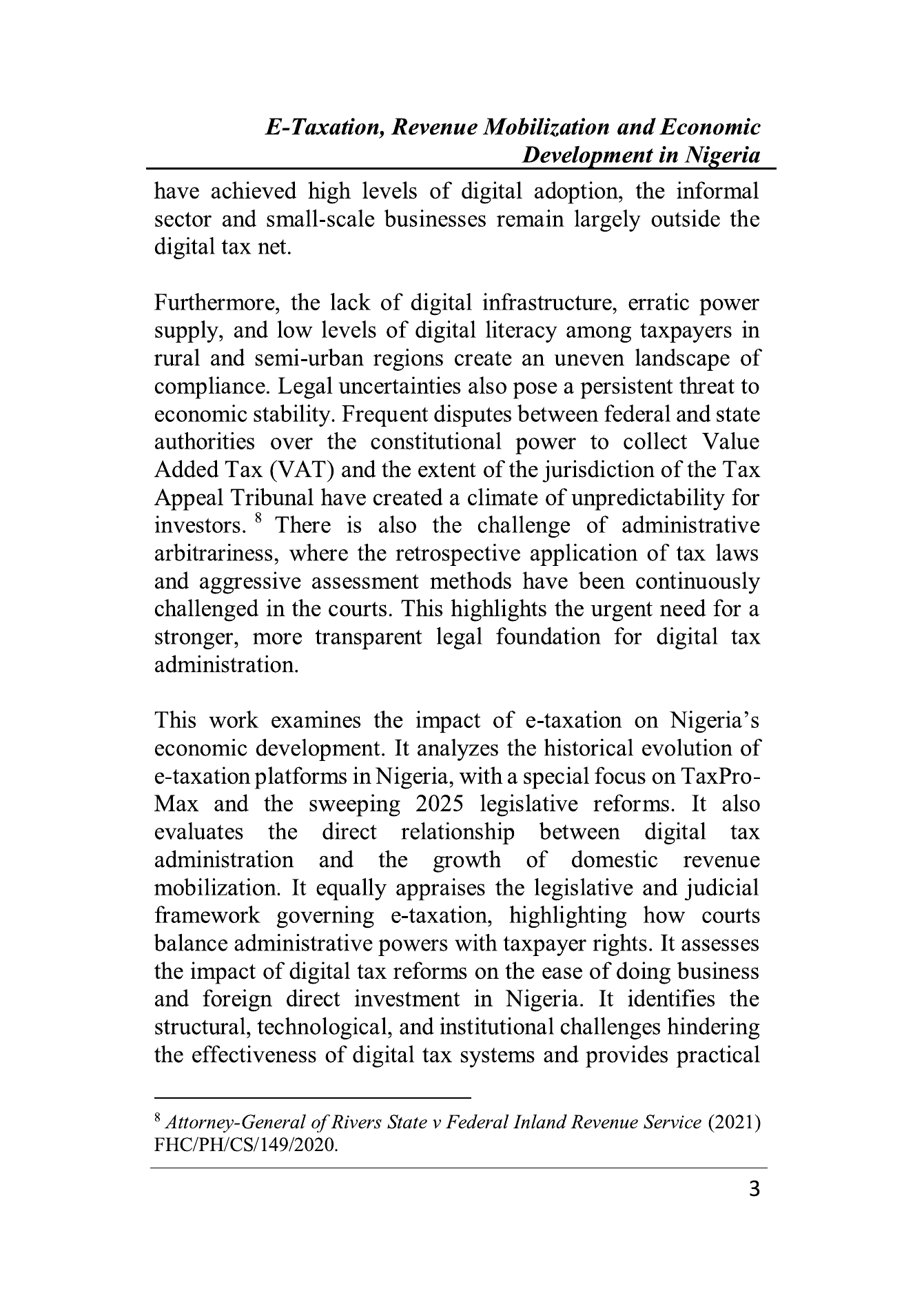
Loading page…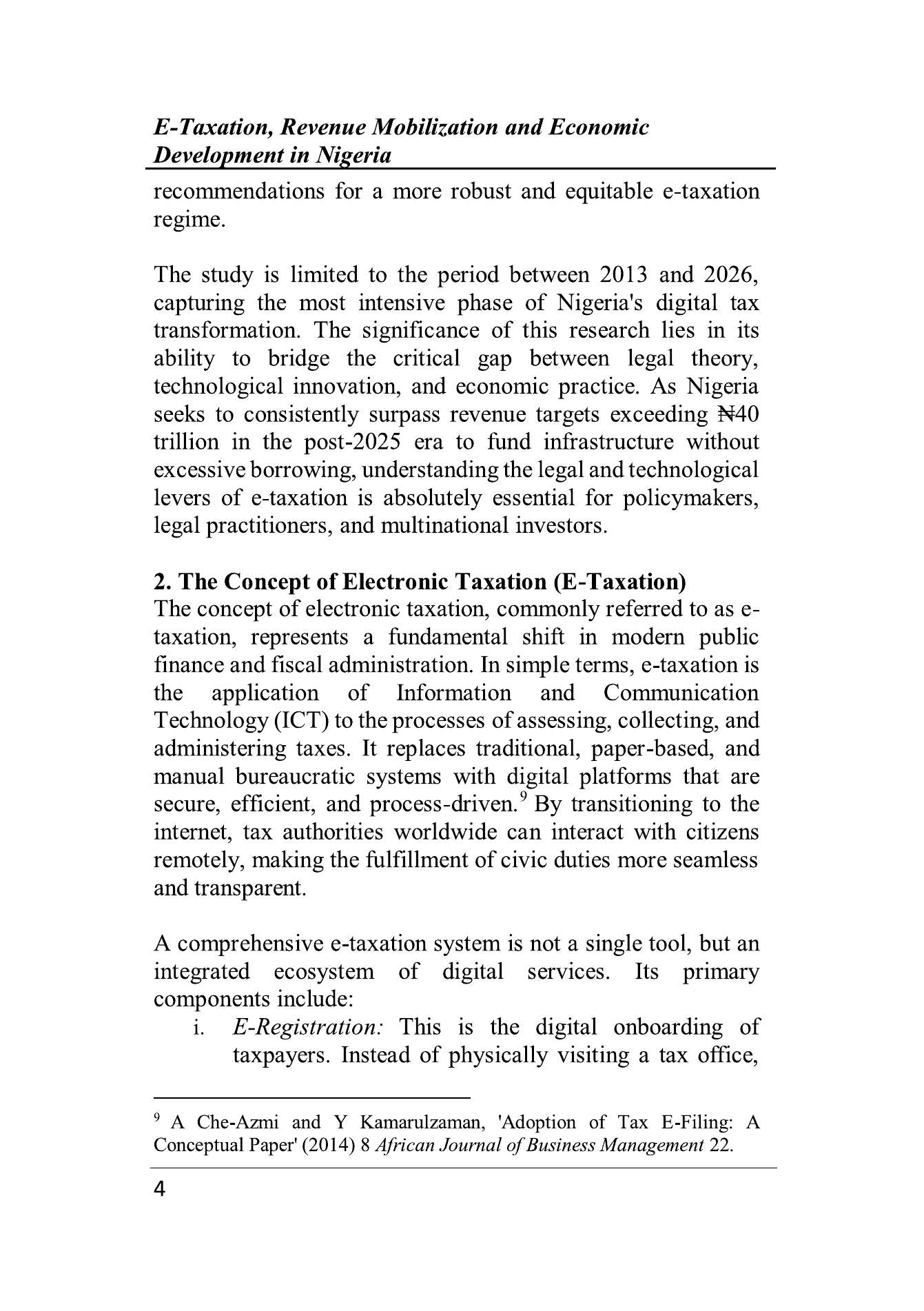
Keep reading
That was the free preview. 27 more pages in the full monograph, yours as a PDF for ₦7,000.