Opening the monograph…
Human Rights & Constitutional Law
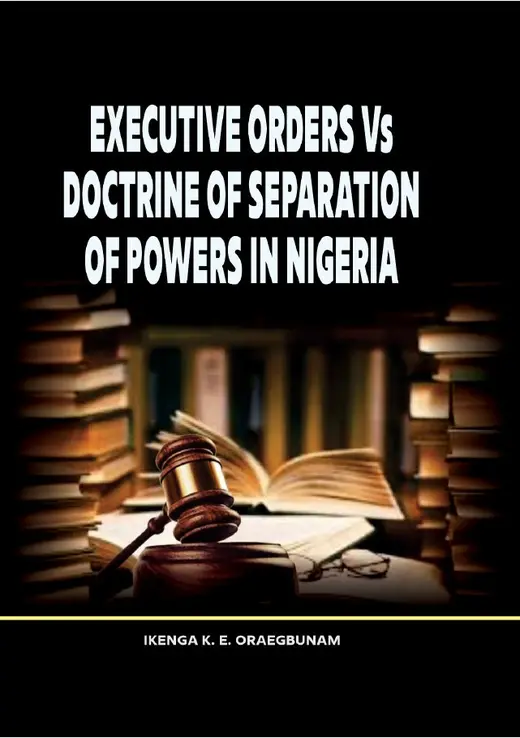
Executive Orders Vs Doctrine of Separation of Powers in Nigeria
About the monograph
An Executive Order in Nigeria is an official directive issued by the President (or state governors) to manage executive branch operations and enforce government policy. These directives are not statutory laws, but powerful legal instruments derived from constitutional powers and existing legislation to guide the actions of Ministries, Departments, and Agencies (MDAs). However, in recent times, Nigeria witnessed spate of Executive Orders from the President, ostentatiously in the form of 'laws seeking to regulate the activities of the government and the people’. Executive Orders as ‘rules issued by the President that have legal effect’ raises issues about the nature of Executive Orders. Do Executive Orders have the force of law? This raises problem for the rule of law in a polity. Executive Orders impact Nigeria's democracy by occasionally blurring the strict separation of powers outlined in the Constitution of the Federal Republic of Nigeria, 1999 (as amended). While Executive Orders provide necessary administrative agility, overbroad Executive Orders risk encroaching on legislative domains, undermining the rule of law and raising a constitutional issue. By strict operation of the doctrine of separation of powers and more so, viewed from the constitutiona perceptive, Executive Orders occasionally cross the line from administrative directives into law-making (eg, modifying existing rules or creating new penal parameters). These encroache on the constitutional duties of the legislature as well as raise a significant concern. The question is: To wha extent do Executive Orders enjoy constitutional validity and legality? This paper evaluates the constitutional basis as well as analyses the rationality for Executive Orders. It assesses the shortcomings of Executive Orders in juxtaposition with the constitutional provisions as well as the doctrine of separation of powers with a view to making appropriate recommendations for reforms.
Cite this book
Ikenga K. E. Oraegbunam, Executive Orders Vs Doctrine of Separation of Powers in Nigeria (Ahmadu Bello University Press, 2026), ISBN 978-978-8590-66-8.
Free preview
First 4 pagesLoading page…
Loading page…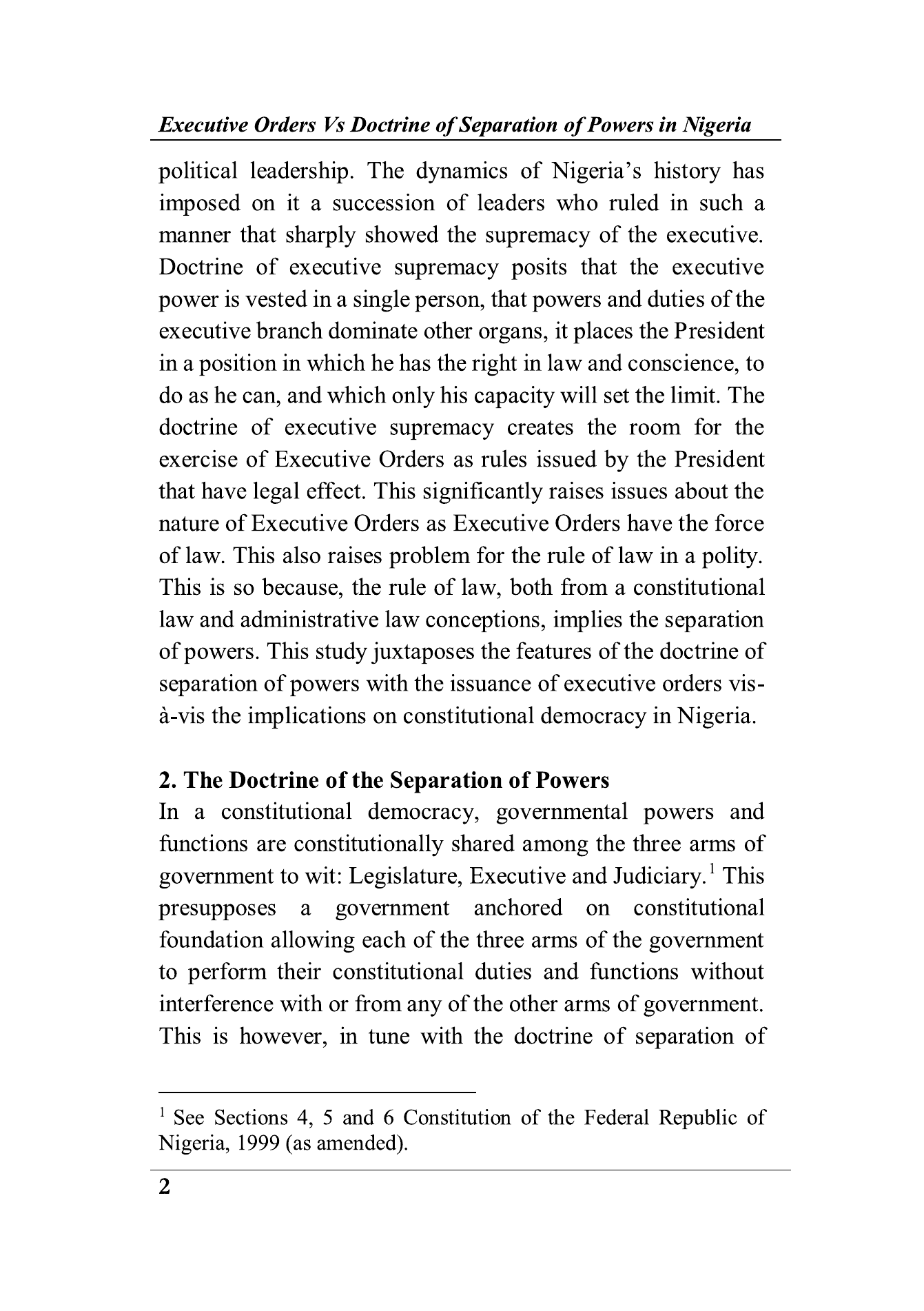
Loading page…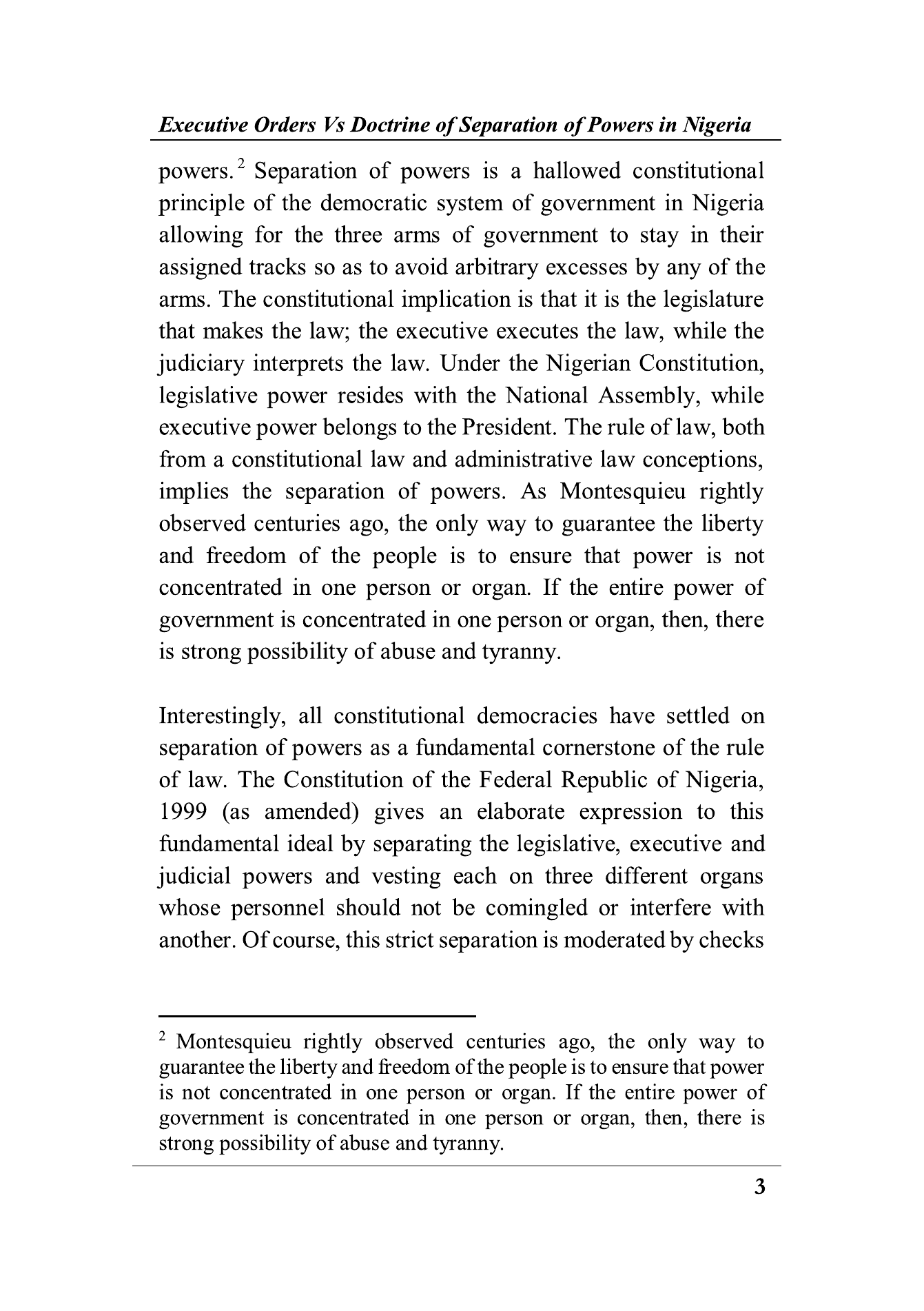
Loading page…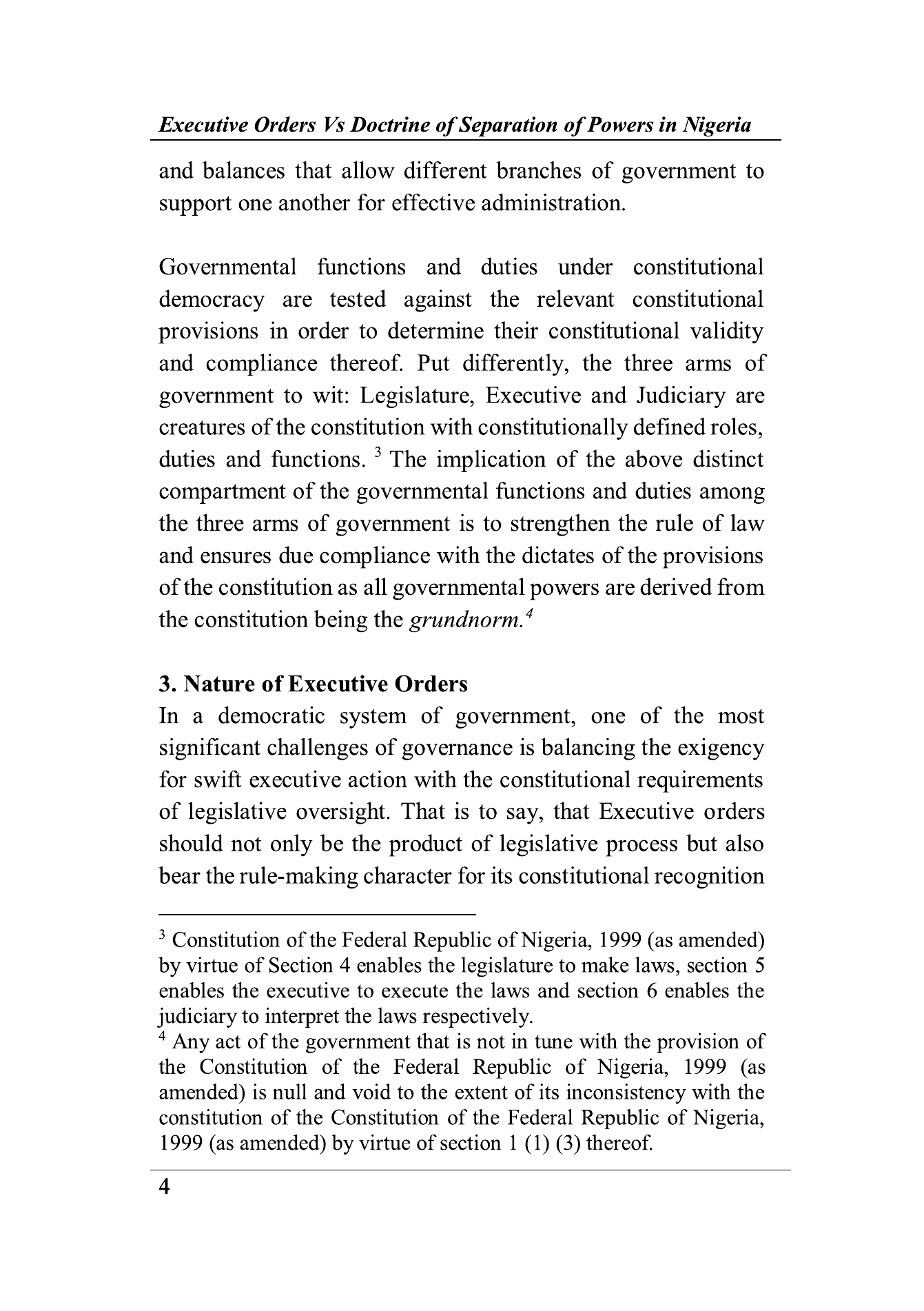
Keep reading
That was the free preview. 30 more pages in the full monograph, yours as a PDF for ₦7,000.