Opening the monograph…
Technology, Cyber & AI
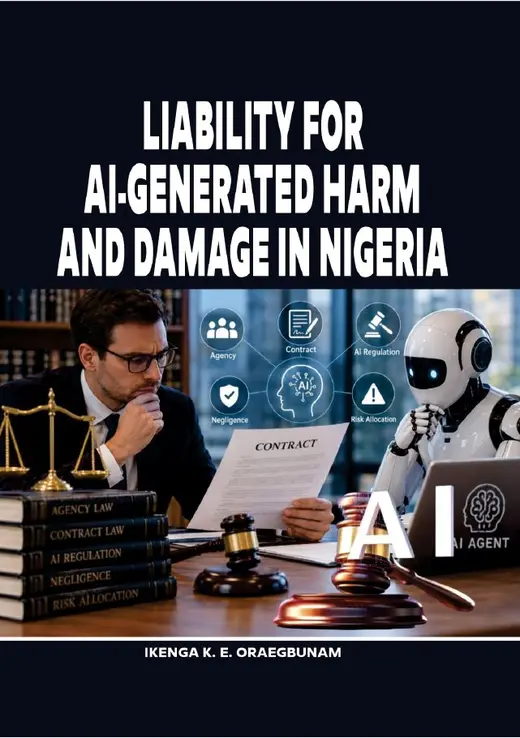
Liability for AI-Generated Harm and Damage in Nigeria
About the monograph
Artificial Intelligence (AI) has moved from the laboratory into Nigerian banking halls, hospitals, courts, farms and police stations within the space ofa single decade. The systems that now grade loan applicants, diagnose patients, summarise depositions and target advertisements are capable of producing real, identifiable harm: misdiagnosis, wrongful denial of credit, defamation, discriminatory profiling, accidents involving autonomous machines. Nigerian statute and common law, however, were written for a world of natural persons and incorporated companies. This study interrogates whether the existing parameters of Nigerian civil, criminal, regulatory and constitutional liability can absorb the new fact pattern of Al-generated harm, and where they cannot, what doctrinal reform is required. Using doctrinal approach, it amines the leading Nigerian authorities on negligence, manufacturer's liability, vicarious liability, corporate criminal liability through the alter ego doctrine, and the enforcement of fundamental rights under Chapter IV of the 1999 Constitution. It then assesses the regulatory provisions of the Nigeria Data Protection Act 2023, the Federal Competition and Consumer Protection Act 2018, the National Information Technology Development Agency Act 2007 and the Cybercrimes (Prohibition, Prevention, Etc) Act 2015, alongside a brief comparative reading of the EU AI Act 2024. The work concludes that Nigeria does not need new persons (the developer, the deployer, the importer and the user remain sufficient defendants) but it does need clearer statutory rules on the allocation of liability across that chain, mandatory impact assessments for high-risk systems, and judicial willingness to extend the rule in Donoghue v Stevenson, as received in Nigerian Bottling Co v Ngonadi, to harm caused by software whose physical embodiment is incidental. The study recommends targeted amendments of the FCCPA and NDPA, and the issue of practice directions under the Fundamental Rights (Enforcement Procedure) Rules 2009 to streamline relief for Al-mediated rights violations.
Cite this book
Ikenga K. E. Oraegbunam, Liability for AI-Generated Harm and Damage in Nigeria (OAU Press Ltd., Obafemi Awolowo University, 2026), ISBN 978-978-8590-54-5.
Free preview
First 4 pagesLoading page…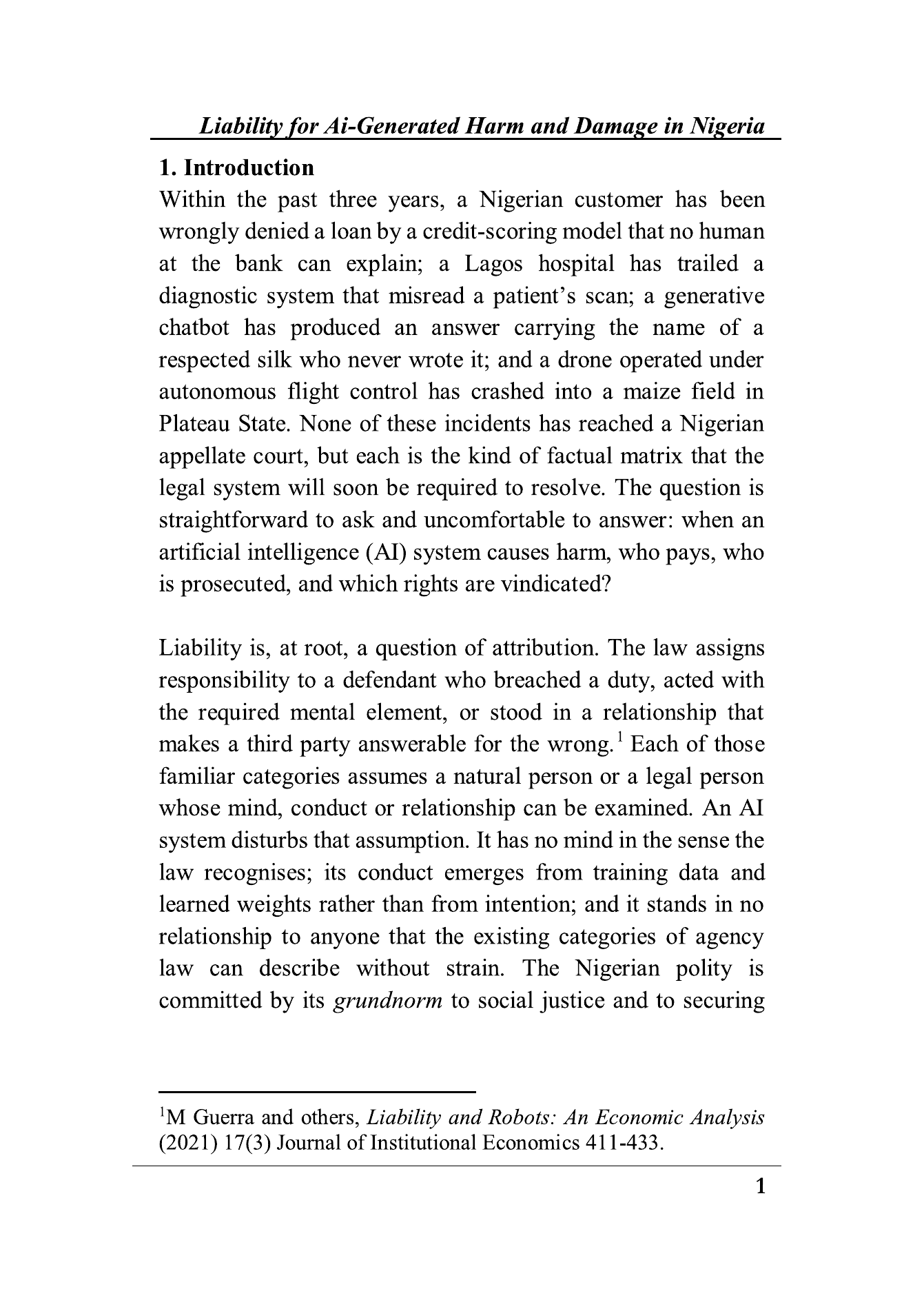
Loading page…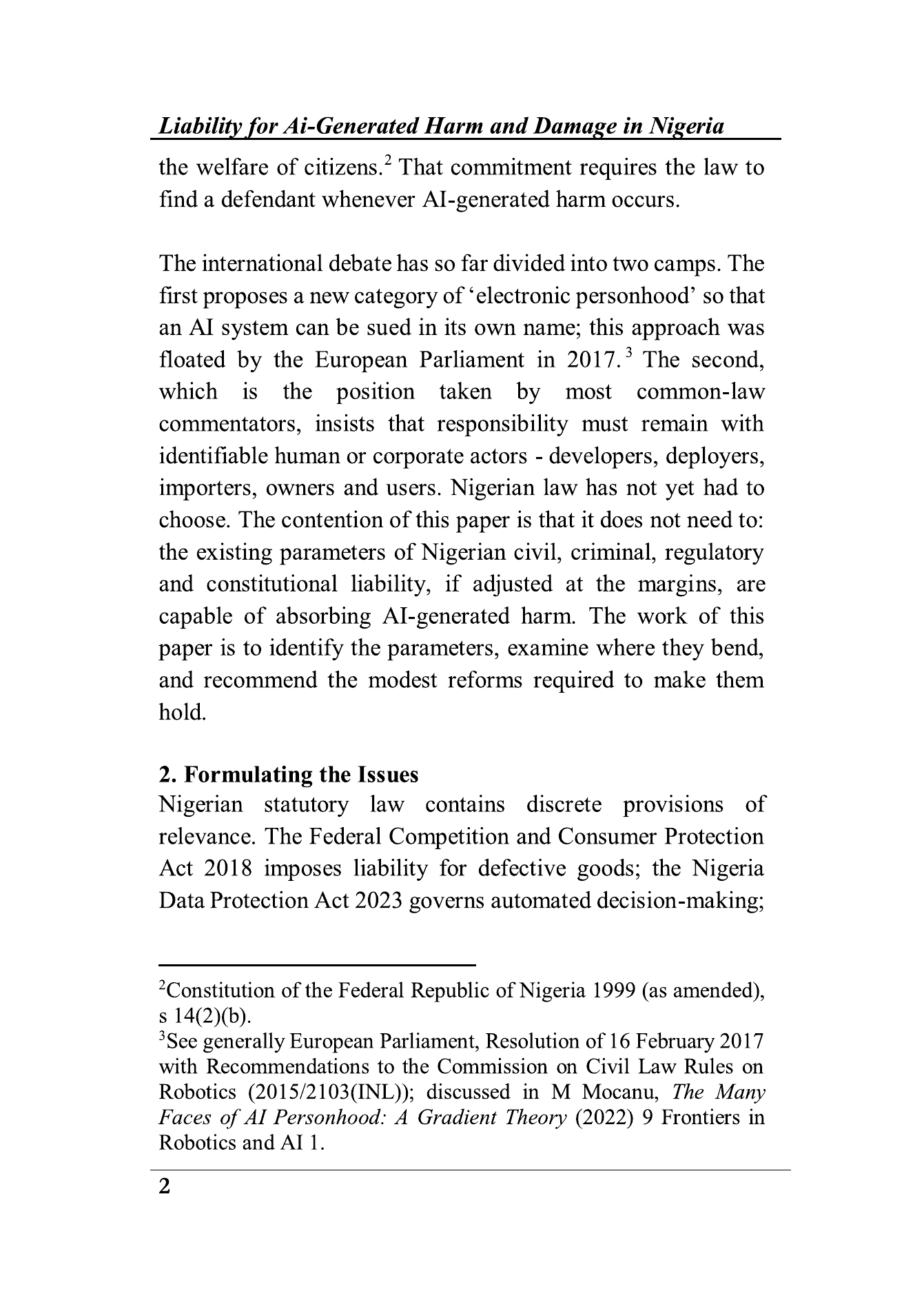
Loading page…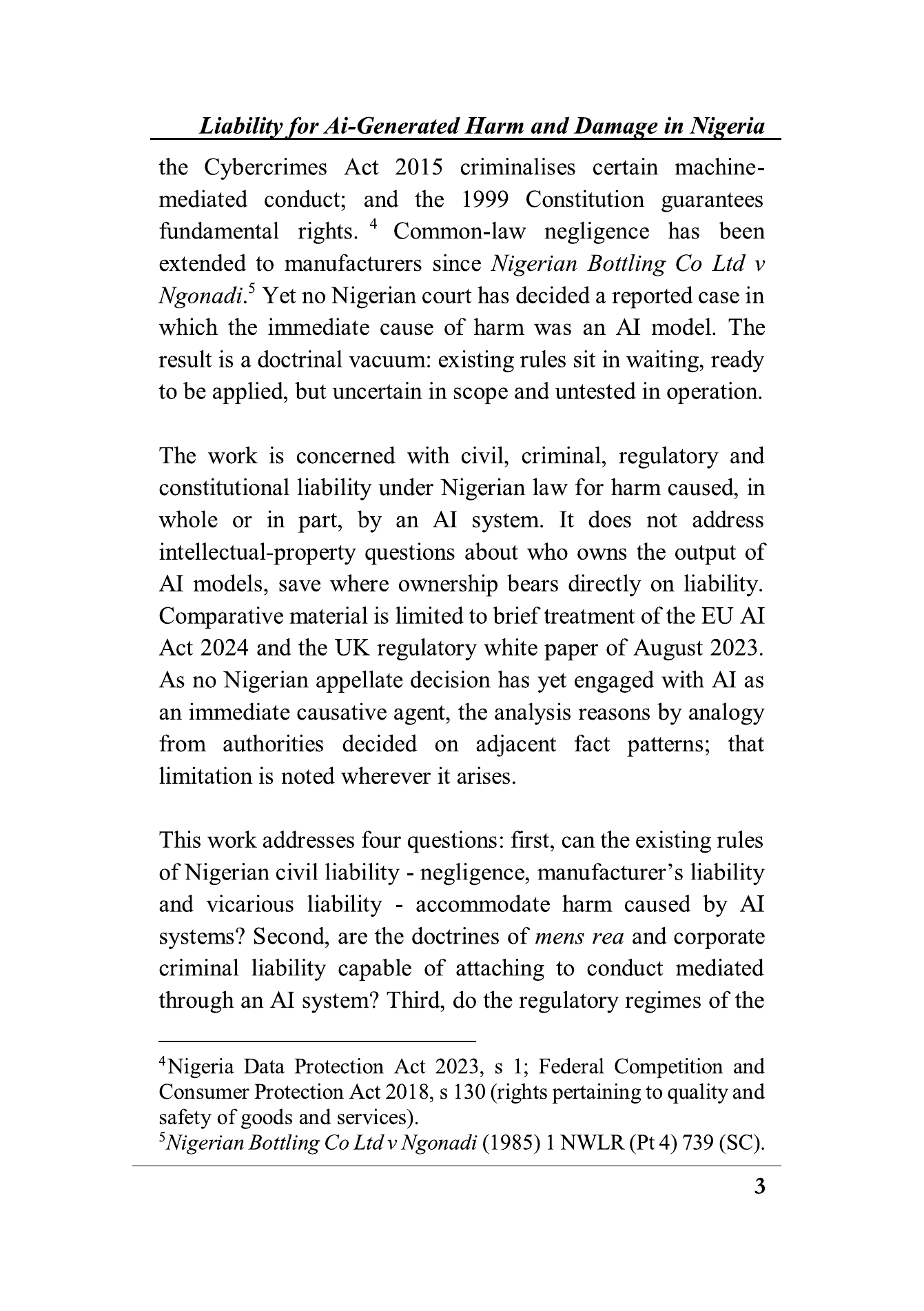
Loading page…
Keep reading
That was the free preview. 37 more pages in the full monograph, yours as a PDF for ₦7,000.