Opening the monograph…
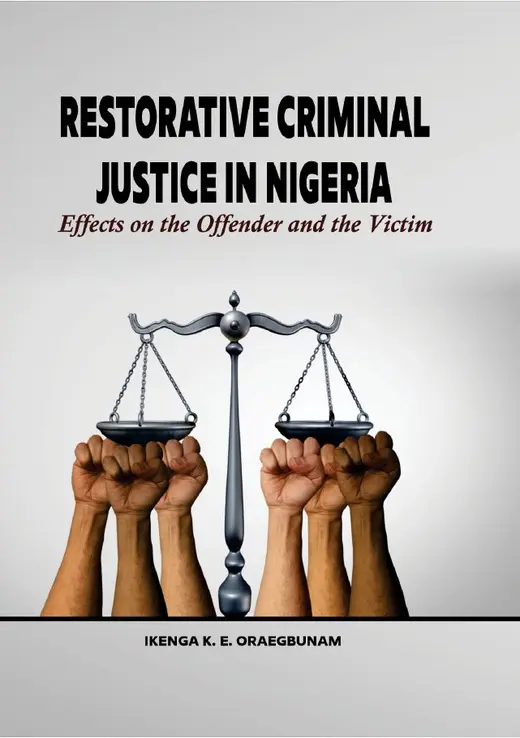
Criminal Law & Justice
Restorative Criminal Justice in Nigeria
Effects on the Offender and the Victim
About the monograph
Restorative justice has emerged as a significant alternative paradigm within criminal justice systems, challenging the traditional dominance of retributive punishment. In Nigeria, criminal justice remains largely offender-focused and state-centred, often marginalising victims and failing to achieve meaningful offender rehabilitation or social reintegration. This study critically examines the interface between Nigerian criminal law and restorative justice, exploring how restorative mechanisms can recalibrate justice delivery toward accountability, healing, and community participation. The study analyses statutory frameworks, judicial practices, correctional policies, and emerging noncustodial measures, alongside lessons from jurisdictions with established restorative justice systems. The study examines theoretical foundations, contrasts restorative and retributive models, and evaluates practical implications for offenders and victims, emphasizing offender responsibility, rehabilitation, victim participation, restitution, and reconciliation. The study finds that while restorative elements exist implicitly in traditional dispute resolution and modern reforms, Nigeria lacks a coherent normative and institutional framework for systematic restorative justice integration. This gap contributes to prison congestion, victim dissatisfaction, and persistent recidivism. The study concludes that restorative justice should.complement rather than replace retributive approaches, humanizing criminal justice while strengthening accountability. Legislative clarification, institutional restructuring, capacity building, and community-based strategies to enhance fairness, victim empowerment, offender reintegration, and public confidence in Nigeria's criminal justice system are necessary measures to the rescue.
Cite this book
Ikenga K. E. Oraegbunam, Restorative Criminal Justice in Nigeria: Effects on the Offender and the Victim (TETFund Academic Publishing Centre, Nnamdi Azikiwe University, 2026), ISBN 978-978-8590-32-3.
Free preview
First 4 pagesLoading page…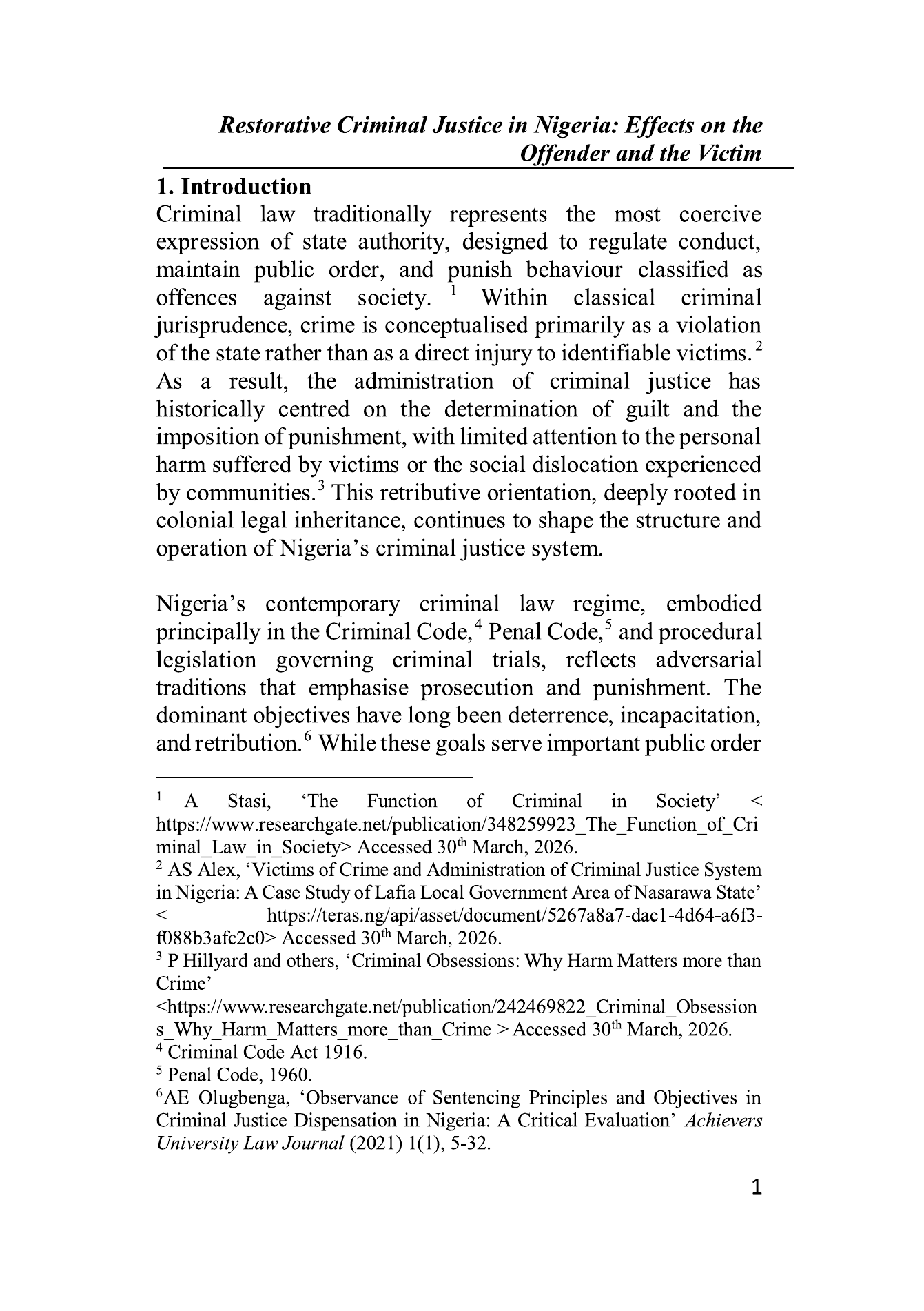
Loading page…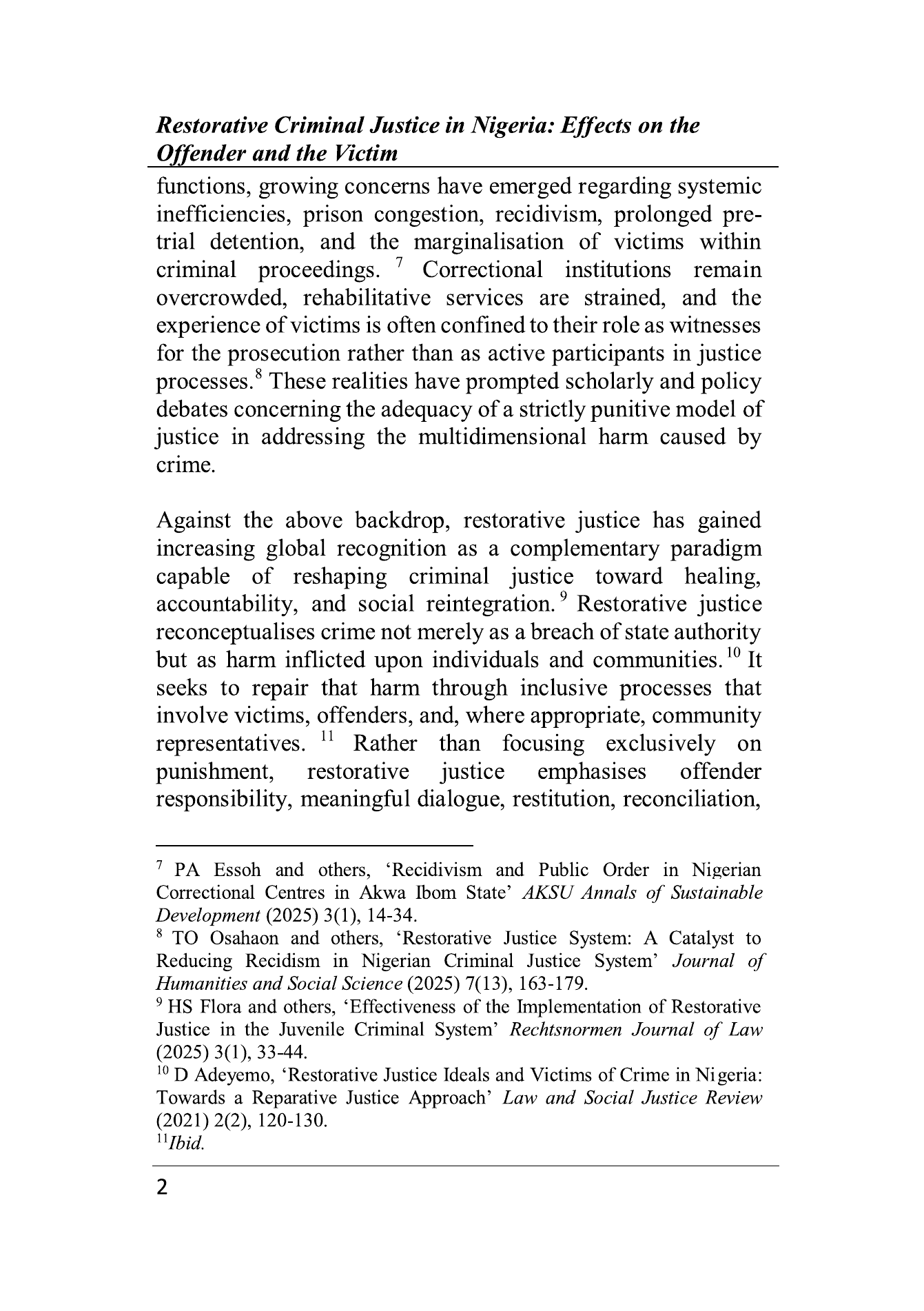
Loading page…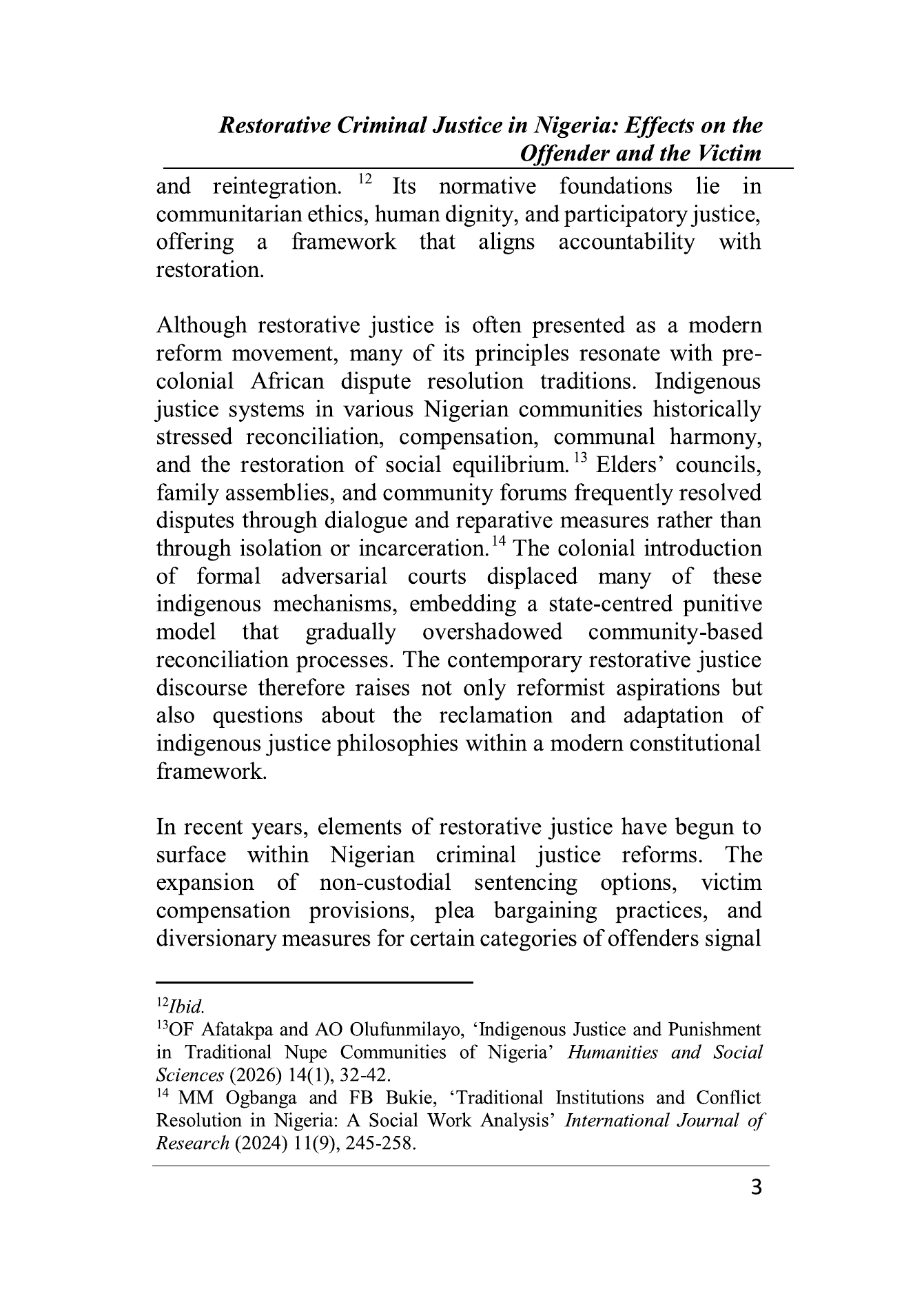
Loading page…
Keep reading
That was the free preview. 29 more pages in the full monograph, yours as a PDF for ₦7,000.