Opening the monograph…
Commercial Law & Arbitration
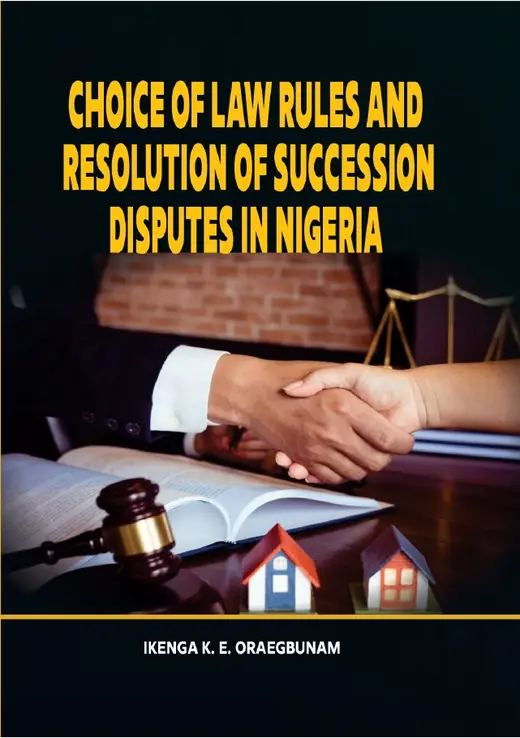
Choice of Law Rules and Resolution of Succession Disputes in Nigeria
About the monograph
Succession law centres on the methods of distributing property of a deceased person. Devolution of deceased's property, however, depends on whether the deceased had a Will or not. Where the deceased had made a Will, the property devolves according to his dictates. If no Will existed, his property devolves according to the customary and or other applicable laws. Succession disputes in Nigeria are among the most contentious legal issues arising from the country's plural legal system. The coexistence of statutory law, customary law, Islamic law, and received English law has created persistent uncertainty in determining the applicable law in matters relating to inheritance and administration of estates. Choice of law rules becomes particularly significant where parties are subject to different personal laws, where property is situated in different jurisdictions, or where marriages were celebrated under different legal systems. This study critically examines the principles governing choice of law in succession disputes in Nigeria. It analyses the operation of statutory provisions, customary law rules, Islamic law principles, and judicial authorities in resolving succession disputes. The work further evaluates the role of domicile, ethnicity, religion, nature of marriage, and location of property in determining the applicable law. The work argues that the multiplicity of succession laws has generated inconsistency, unpredictability, and discrimination, particularly against women and children under certain customary systems. It concludes that Nigeria requires comprehensive reform aimed at harmonizing succession laws while preserving legitimate cultural values and constitutional guarantees of equality. Justice and that unification, integration, harmonization and legal transplant of laws of succession is a viable means to eliminating the conflicts associated with pluralism of laws of succession in Nigeria.
Cite this book
Ikenga K. E. Oraegbunam, Choice of Law Rules and Resolution of Succession Disputes in Nigeria (TETFund Academic Publishing Centre, Nnamdi Azikiwe University, 2026), ISBN 978-978-8590-46-0.
Free preview
First 4 pagesLoading page…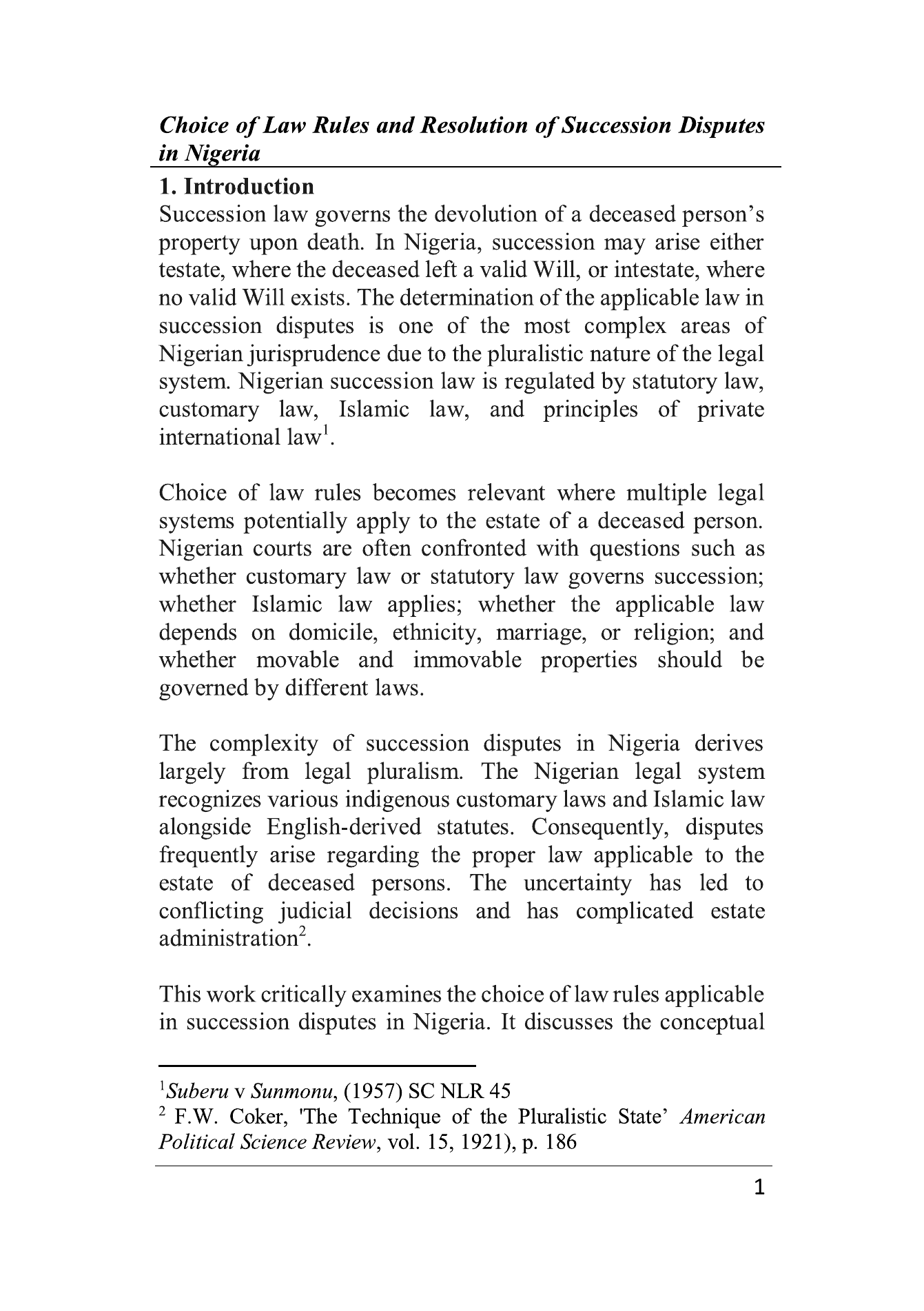
Loading page…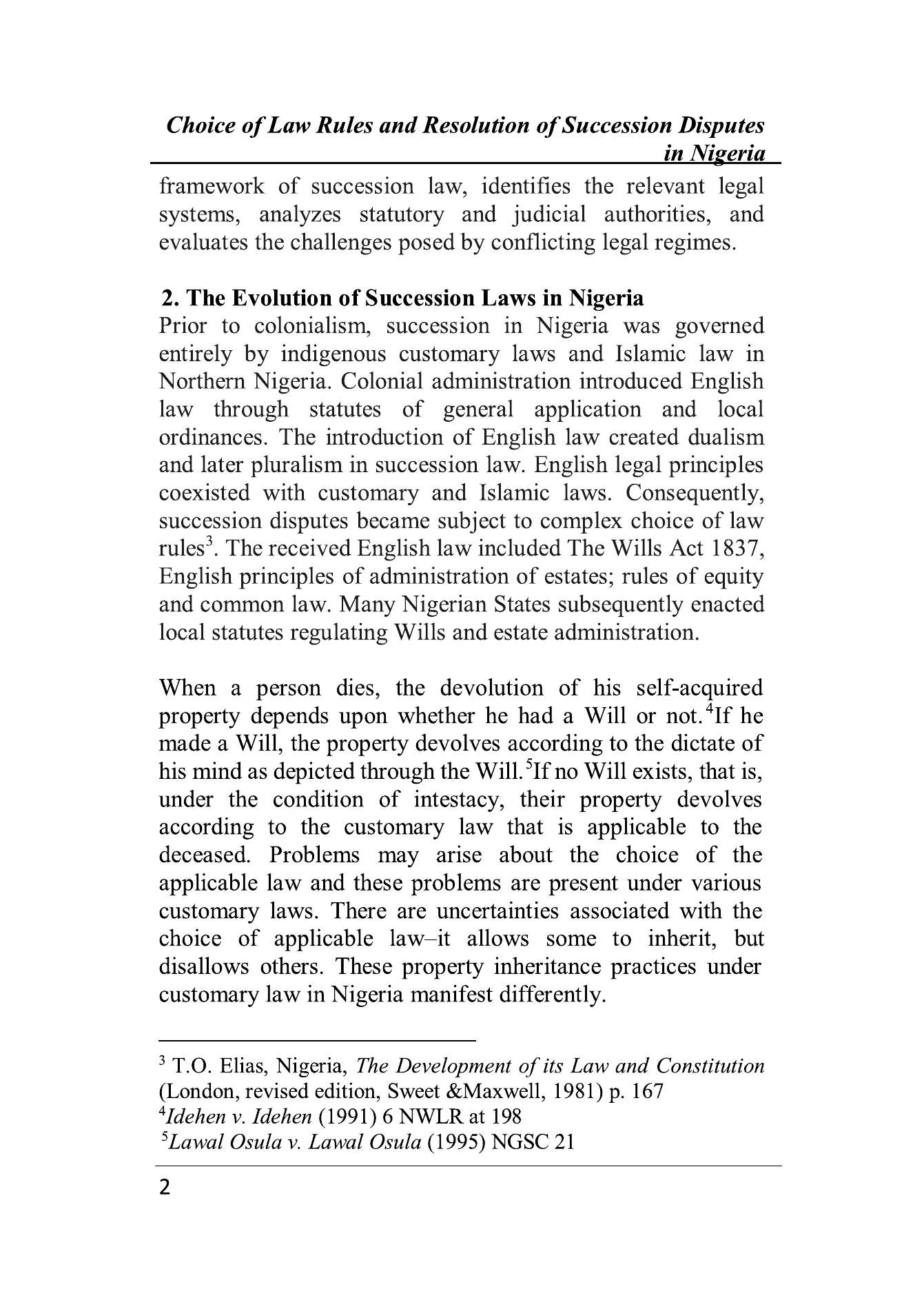
Loading page…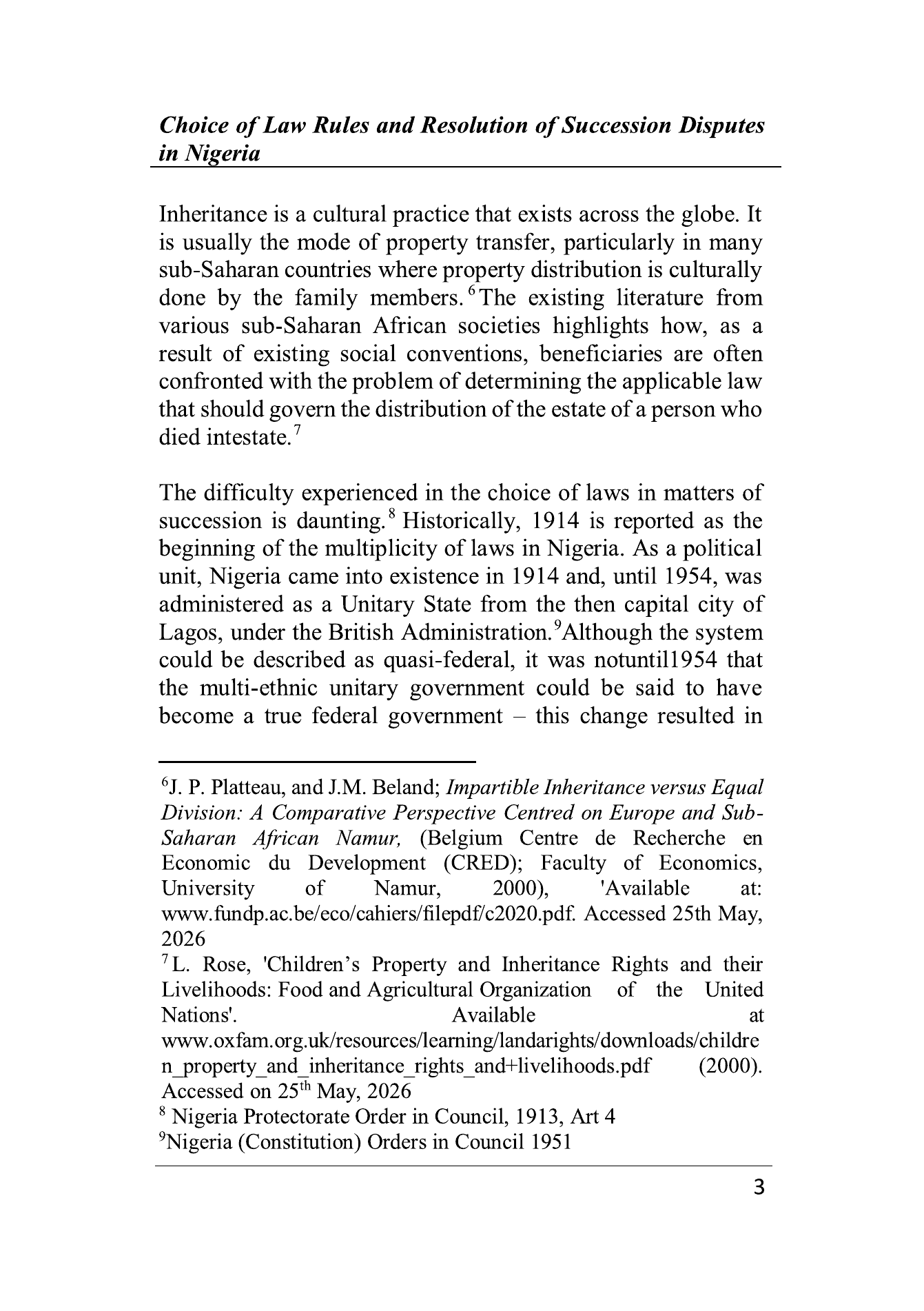
Loading page…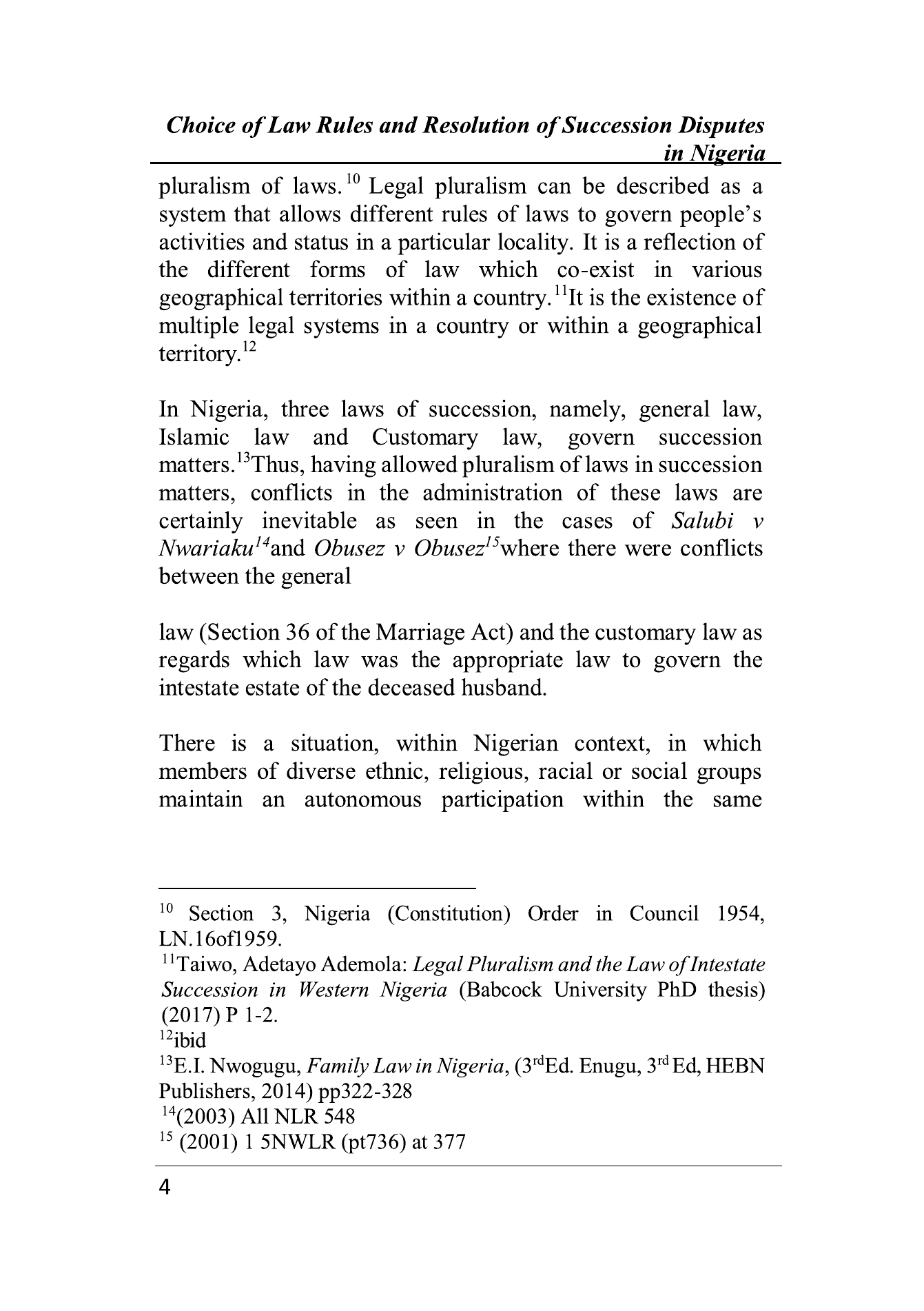
Keep reading
That was the free preview. 39 more pages in the full monograph, yours as a PDF for ₦7,000.