Opening the monograph…
Commercial Law & Arbitration
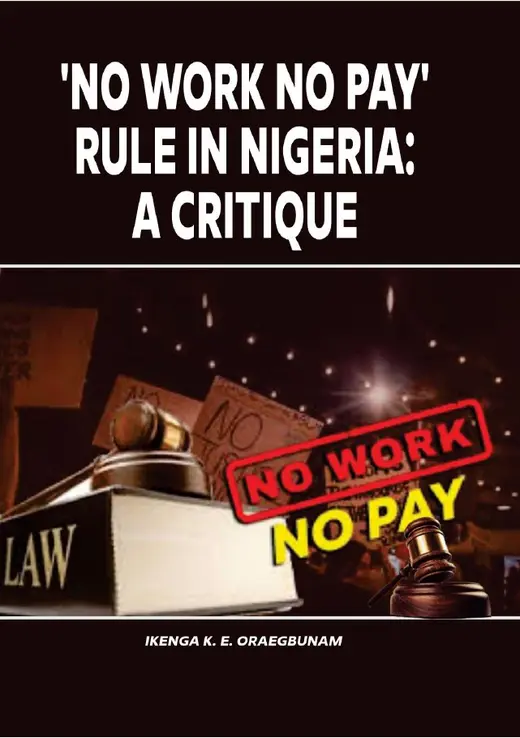
‘No Work No Pay’ Rule in Nigeria
A Critique
About the monograph
The 'No Work No Pay' rule, as encapsulated in section 43 of the Trade Disputes Act, Cap T8 Laws of the Federation of Nigeria 2004, remains one of the most controversial doctrines in Nigerian labour law. While the rule is grounded in the contractual principle that wages are earned only upon the performance of work, its application within Nigeria's industrial relations system has generated significant legal, constitutional, and human rights concerns. This study critically examines the rule against the backdrop of workers' rights, particularly the right to strike and freedom of association. It adopts a doctrinal methodology, relying on statutory provisions, judicial decisions, scholarly writings, and international labour standards. The study finds that although the rule serves legitimate economic and regulatory purposes, its rigid and often selective application suppresses workers' rights, creates an imbalance in employer-employee relations, and undermines the effectiveness of collective bargaining. Furthermore, the rule raises serious constitutional issues relating to freedom of association, human dignity, and proportionality, as well as concerns regarding Nigeria's compliance with international labour obligations. Through a comparative analysis of jurisdictions such as South Africa and the United Kingdom, the study demonstrates that a more balanced and rights-sensitive approach is both feasible and desirable. It concludes that the current application of the 'No Work No Pay' rule in Nigeria is overly restrictive and requires urgent legislative and judicial reform to align with contemporary labour standards and principles of social justice.
Cite this book
Ikenga K. E. Oraegbunam, ‘No Work No Pay’ Rule in Nigeria: A Critique (TETFund Academic Publishing Centre, Nnamdi Azikiwe University, 2026), ISBN 978-978-63774-3-8.
Free preview
First 4 pagesLoading page…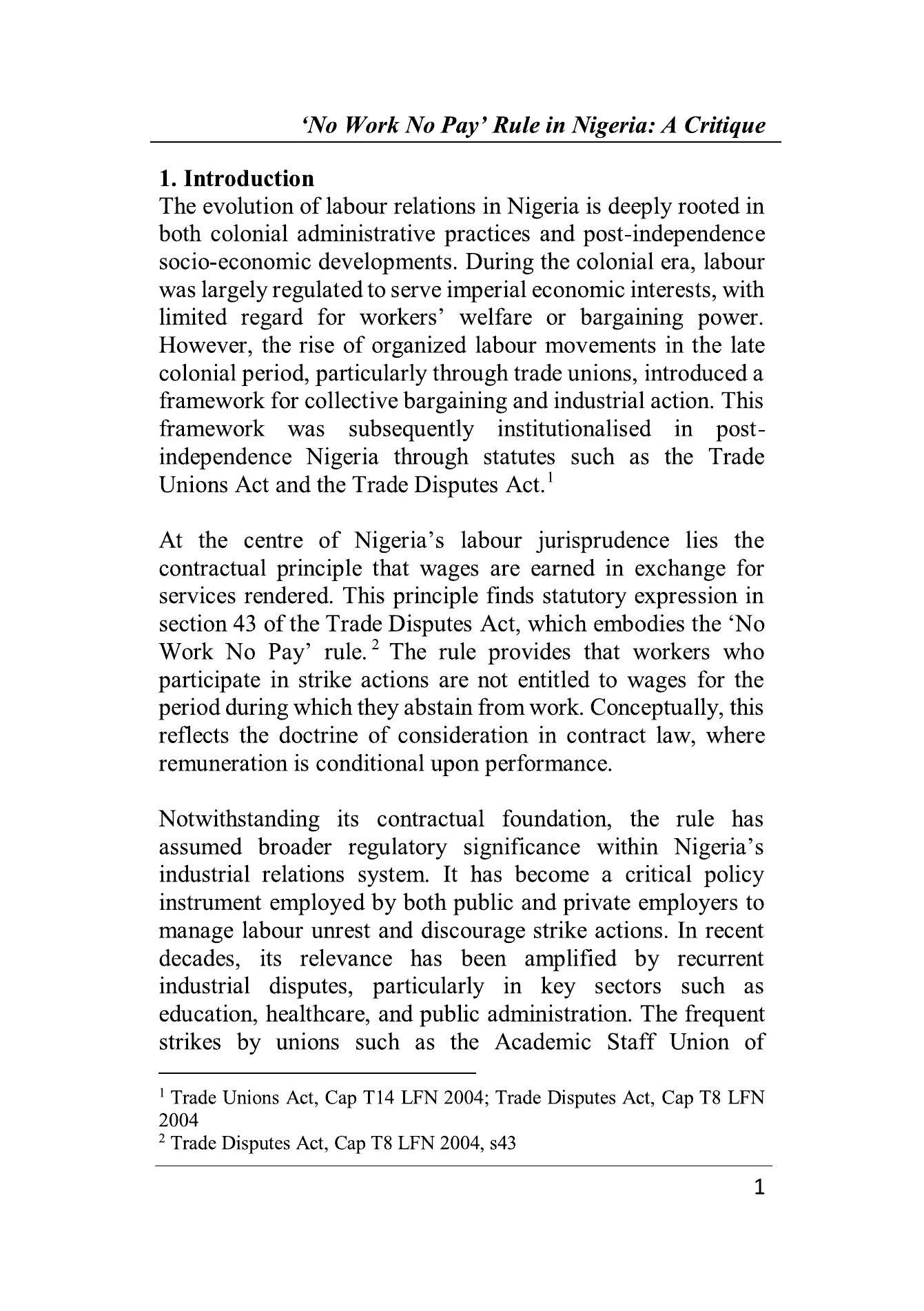
Loading page…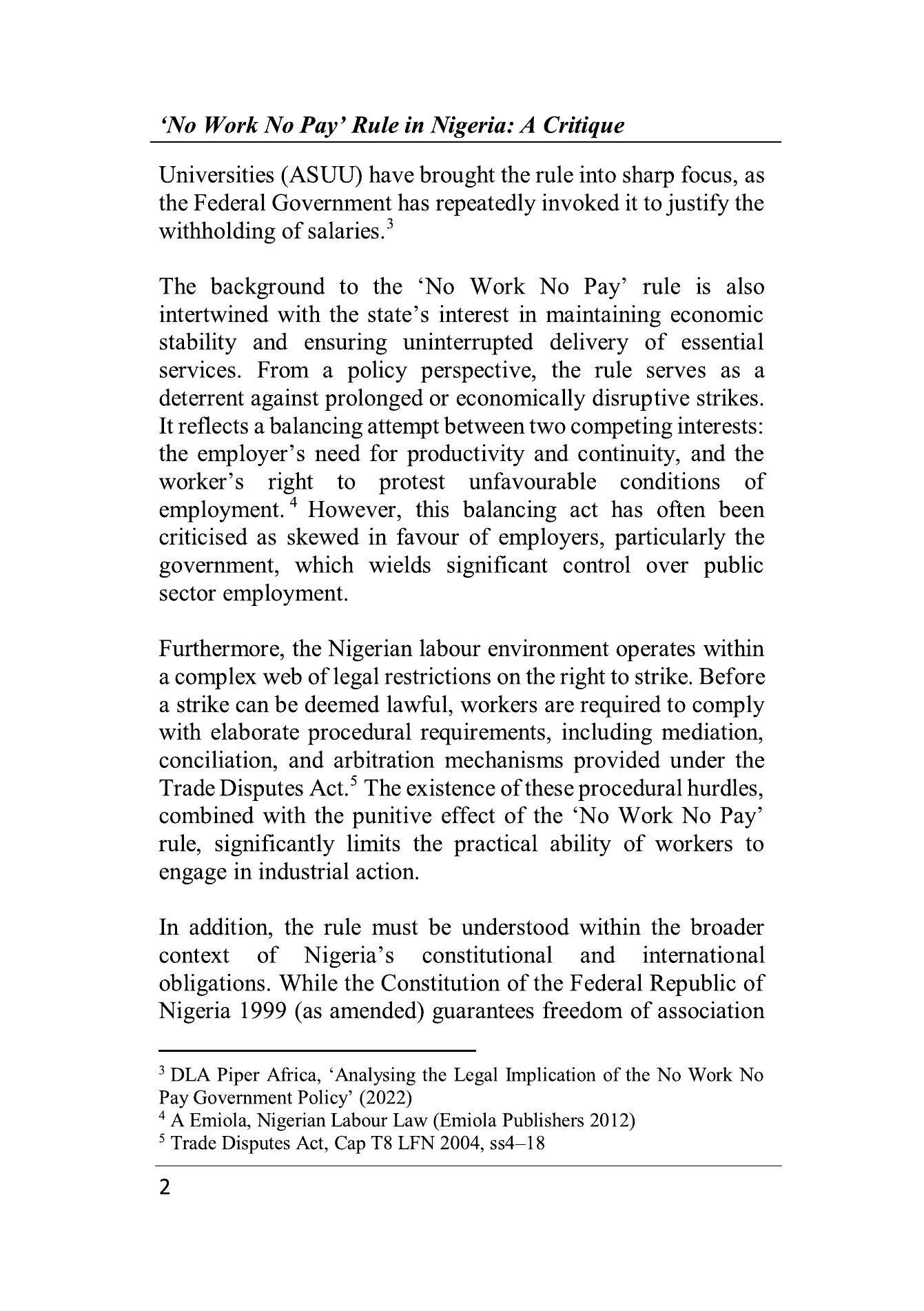
Loading page…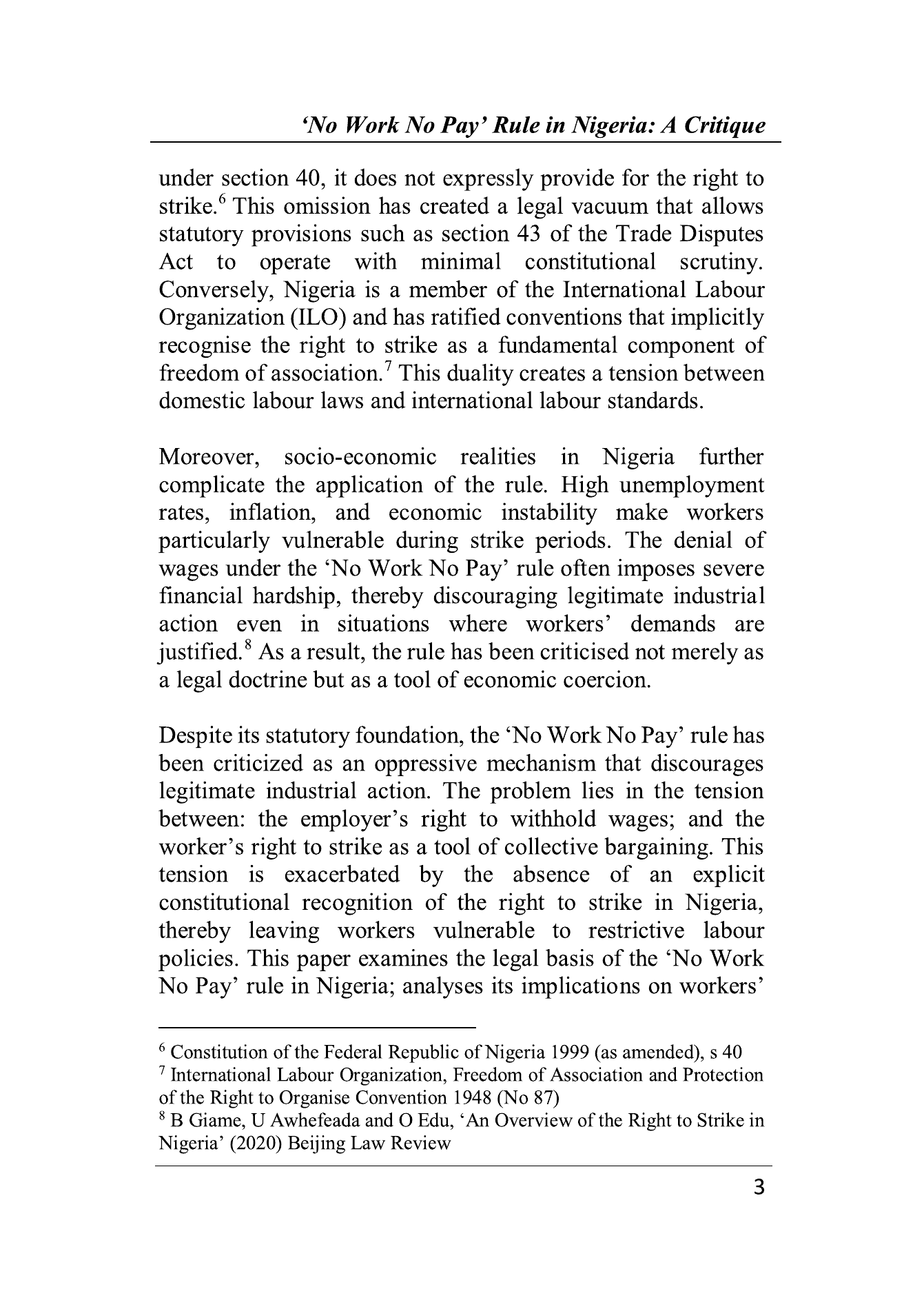
Loading page…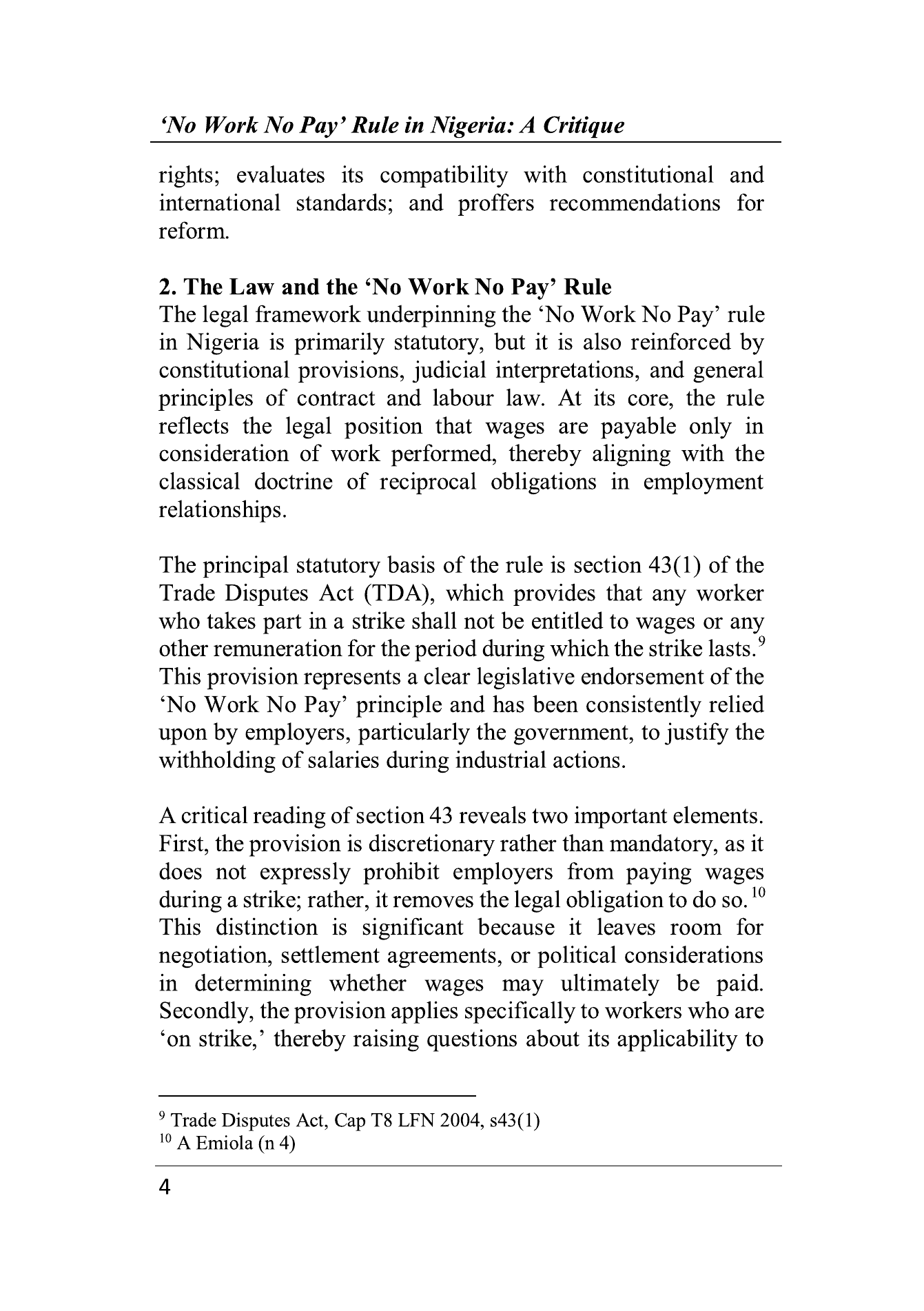
Keep reading
That was the free preview. 28 more pages in the full monograph, yours as a PDF for ₦7,000.
More on commercial law & arbitration
→All monographs