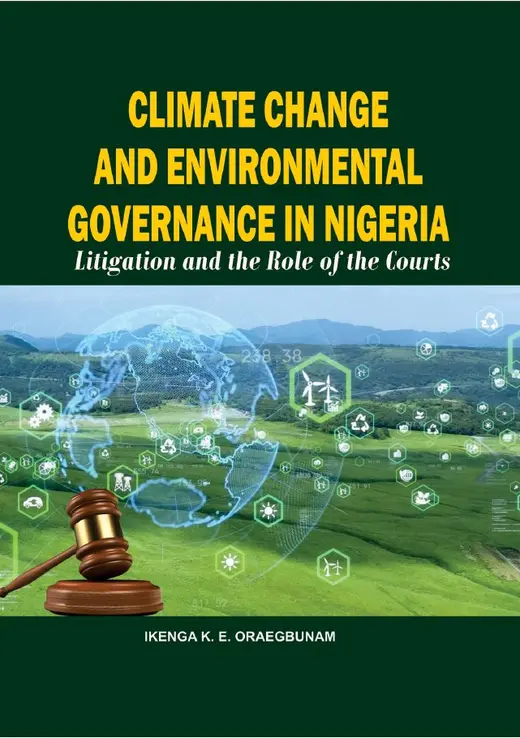
Opening the monograph…
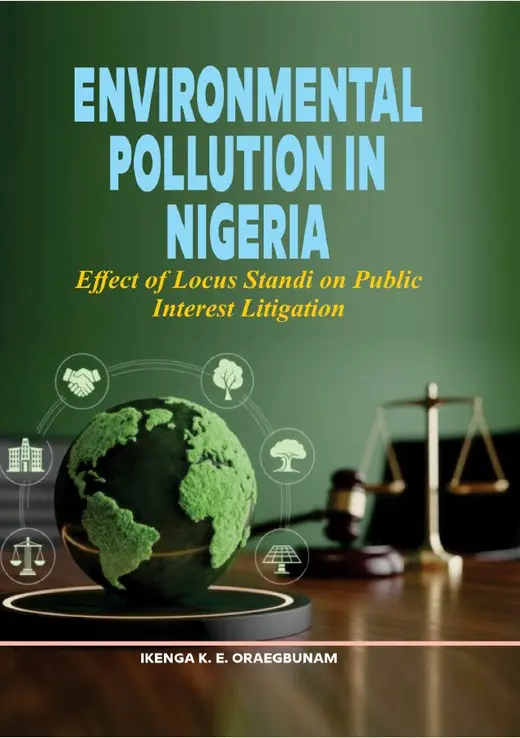
International & Environmental Law
Environmental Pollution in Nigeria
Effect of Locus Standi on Public Interest Litigation
About the monograph
Environmental degradation poses a significant threat to public health, livelihoods, and sustainable development in Nigeria. From persistent oil pollution and gas flaring in the Niger Delta to widespread waste disposal problems, flooding, air pollution, and climate change-related vulnerabilities, environmental harm continues to affect communities across the country. Yet victims and public interest organisations seeking judicial remedies for environmental harm have historically been constrained by the restrictive application of /ocus standi, which limited environmental litigation to persons able to demonstrate personal injury. This study explores the doctrine of /ocus standi in the context of environmental litigation in Nigeria against the backdrop of growing demands for environmental justice and accountability. It examines the conceptual foundations of standing, the distinctive nature of environmental harm, and the constitutional framework for environmental protection in Nigeria. The work further investigates the significance of the Fundamental Rights (Enforcement Procedure) Rules 2009 and the Supreme Court's decision in Centre for Oil Pollution Watch v NNPC in liberalising standing in public interest environmental litigation. Adopting a doctrinal approach based on constitutional provisions, statutes, judicial decisions, international instruments, and scholarly literature, the study argues that environmental justice in Nigeria cannot be effectively realised unless standing is fully liberalised to permit public interest actions in environmental matters. It concludes that although recent legal developments have improved access to environmental justice, further judicial and institutional reforms are required to ensure effective environmental protection in Nigeria.
Cite this book
Ikenga K. E. Oraegbunam, Environmental Pollution in Nigeria: Effect of Locus Standi on Public Interest Litigation (TETFund Academic Publishing Centre, Nnamdi Azikiwe University, 2026), ISBN 978-978-8590-64-4.
Free preview
First 4 pagesLoading page…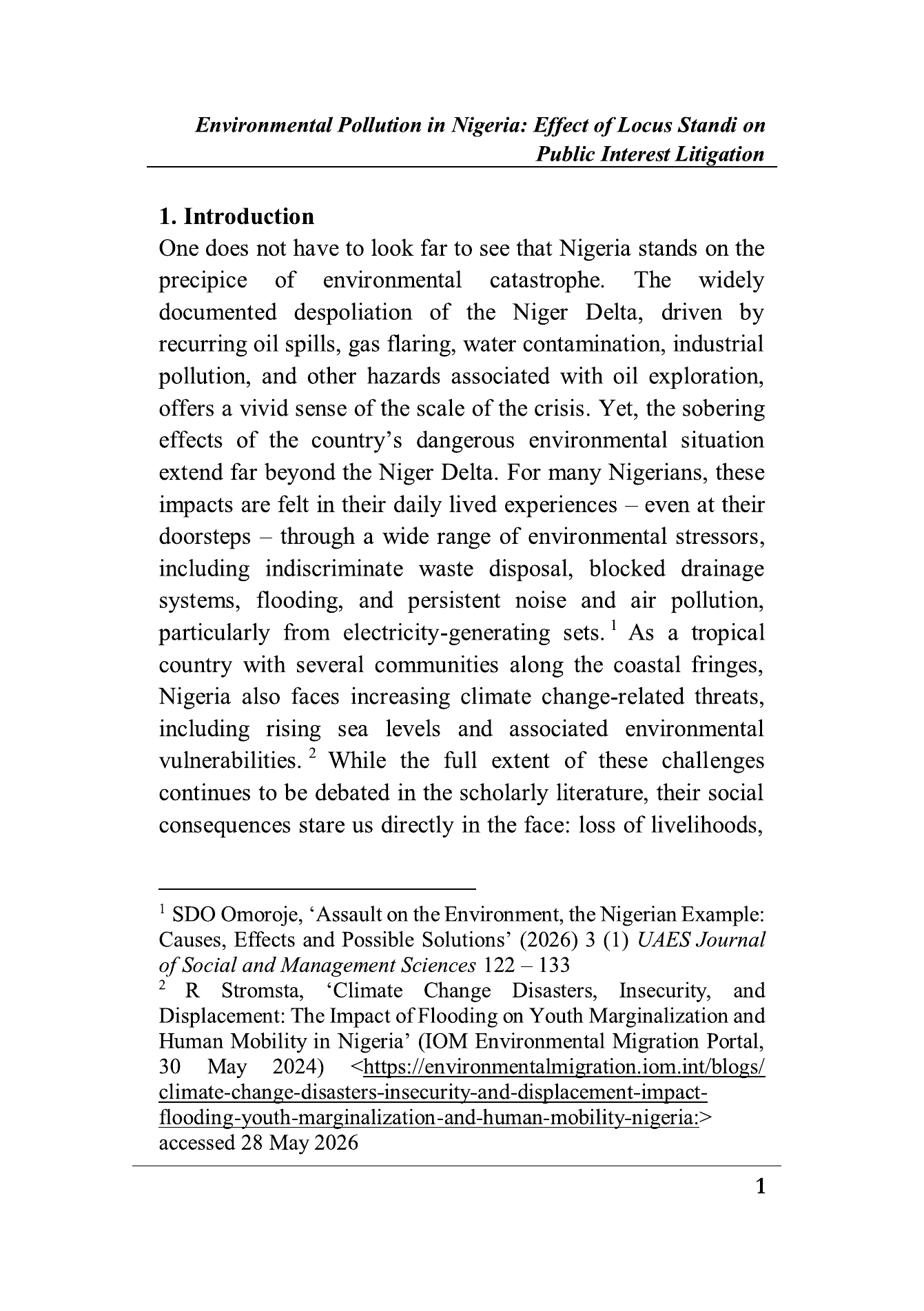
Loading page…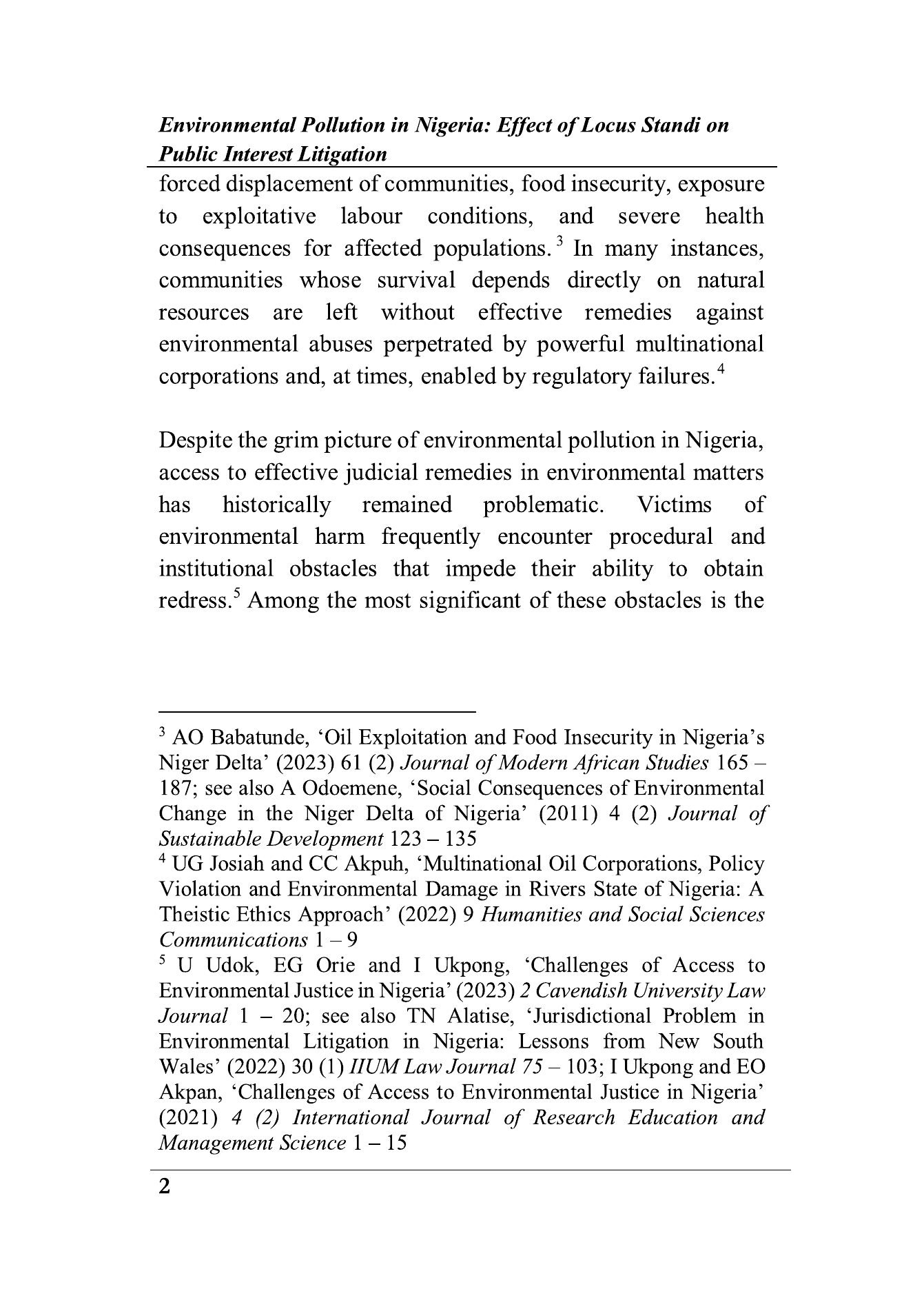
Loading page…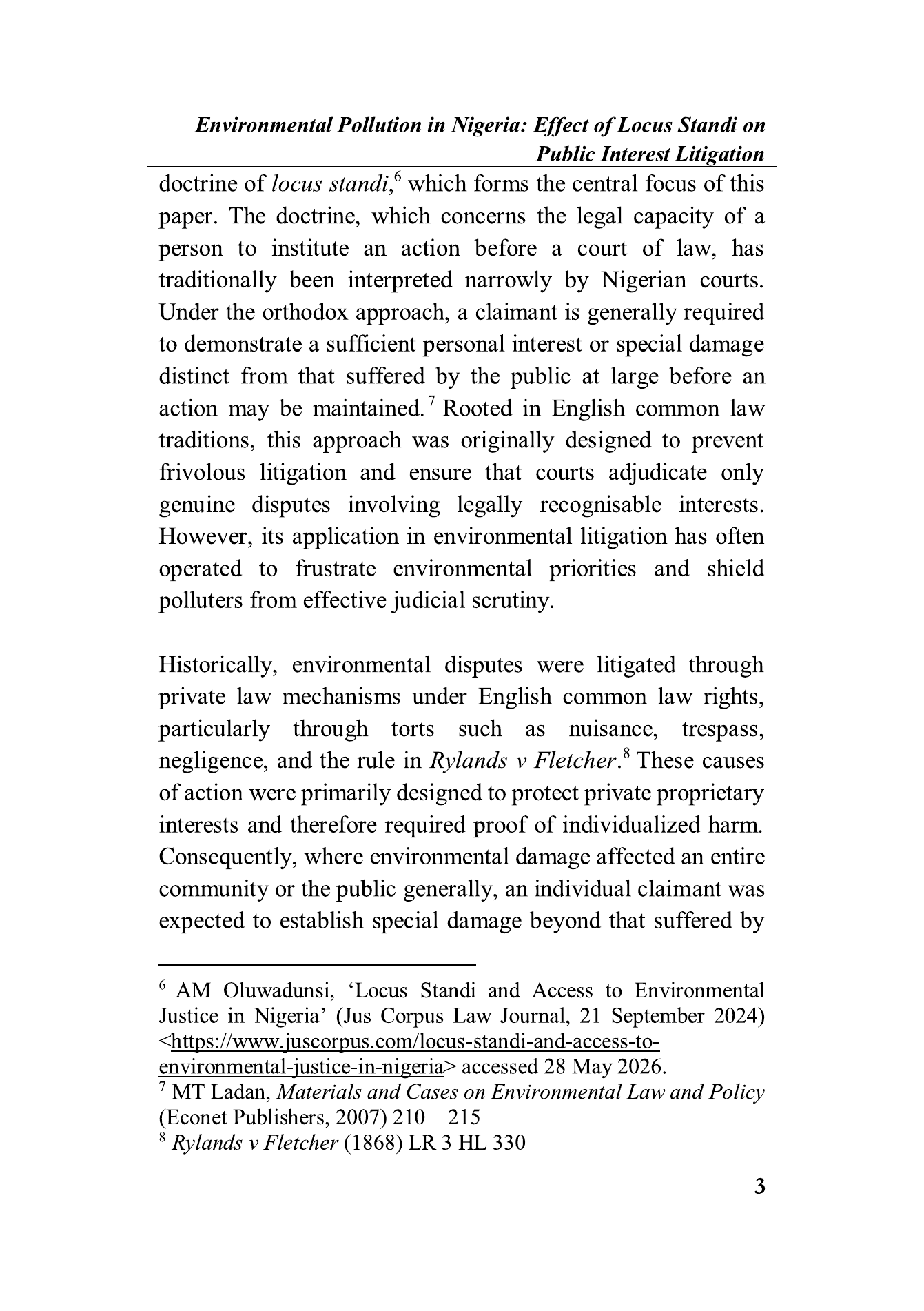
Loading page…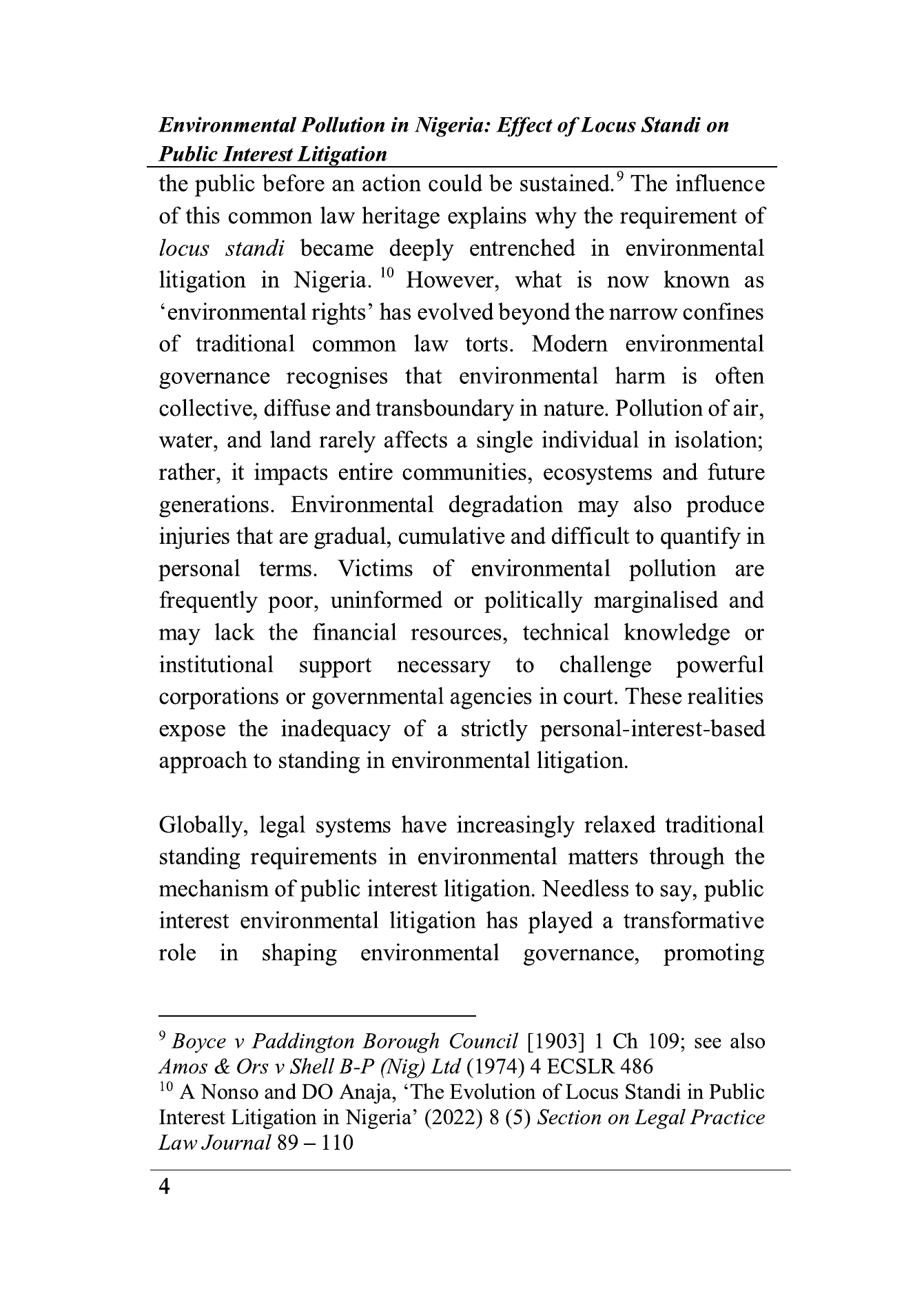
Keep reading
That was the free preview. 50 more pages in the full monograph, yours as a PDF for ₦7,000.