Opening the monograph…
International & Environmental Law
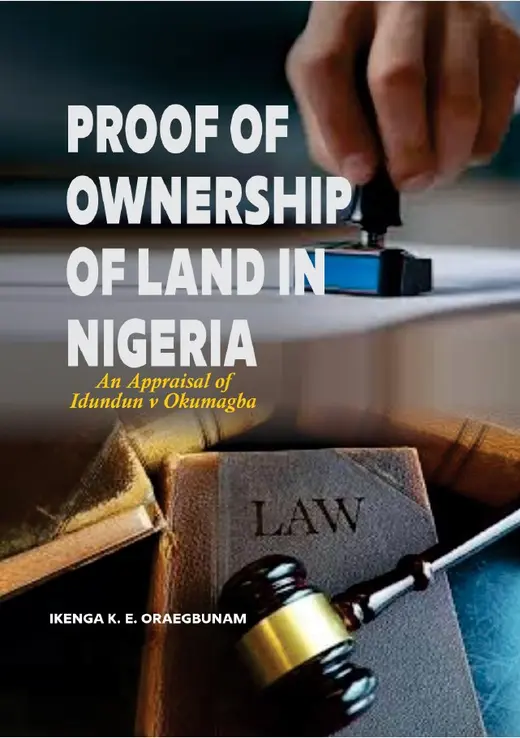
Proof of Ownership of Land in Nigeria
An Appraisal of Idundun v Okumagba
About the monograph
Land remains a central and contested resource in Nigeria, embodying wealth, identity, and socio-political authority. Disputes over land ownership constitute a substantial portion of civil litigation, complicated by the coexistence of customary, statutory, and equitable tenure systems. This study critically examines the legal principles governing proof of ownership of land in Nigeria, with particular focus on the landmark Supreme Court decision in Jdundun v Okumagba, which articulated five recognized methods for establishing title: traditional evidence, production of documents of title, acts of ownership over time, long possession, and possession of connected or adjacent land. Employing a doctrinal methodology, the study analyzes case law, statutory provisions under the Land Use Act 1978, and scholarly commentaries to evaluate the judicial application, doctrinal coherence, and contemporary relevance of these principles. Findings reveal that while the decision provides a structured framework reconciling customary practices with formal legal requirements, challenges persist, including evidentiary subjectivity, confusion between ownership and possession, and tensions with modern statutory land administration. Comparative insights from the United Kingdom and South Africa bring to light alternative approaches that emphasise registration and statutory certainty while accommodating factual possession. The study recommends that reinforcing doctrinal clarity, standardizing evidentiary assessment, and integrating formal administrative mechanisms are crucial to enhancing certainty, efficiency, and fairness in Nigerian land ownership litigation.
Cite this book
Ikenga K. E. Oraegbunam, Proof of Ownership of Land in Nigeria: An Appraisal of Idundun v Okumagba (TETFund Academic Publishing Centre, Nnamdi Azikiwe University, 2026), ISBN 978-978-8590-02-6.
Free preview
First 4 pagesLoading page…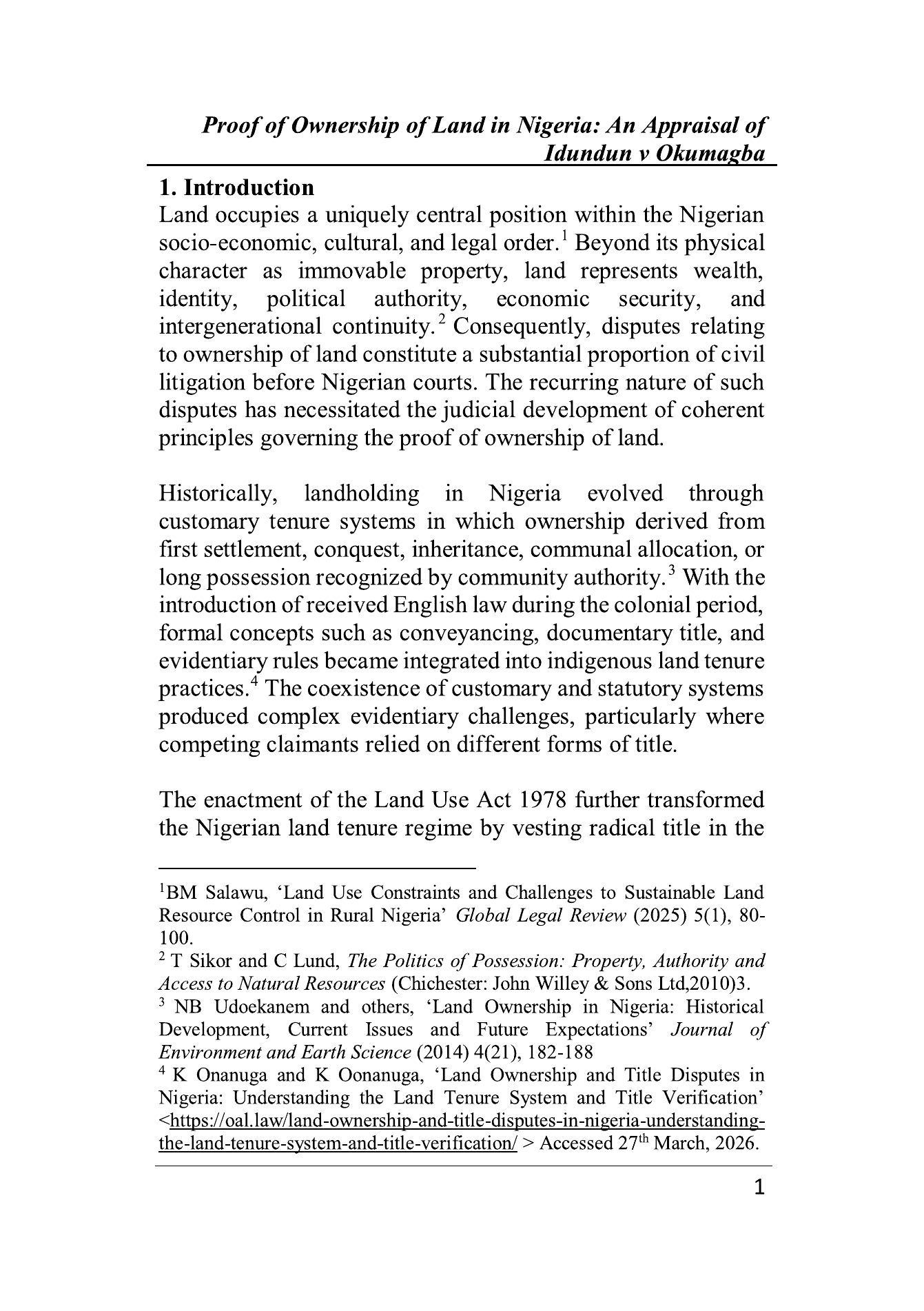
Loading page…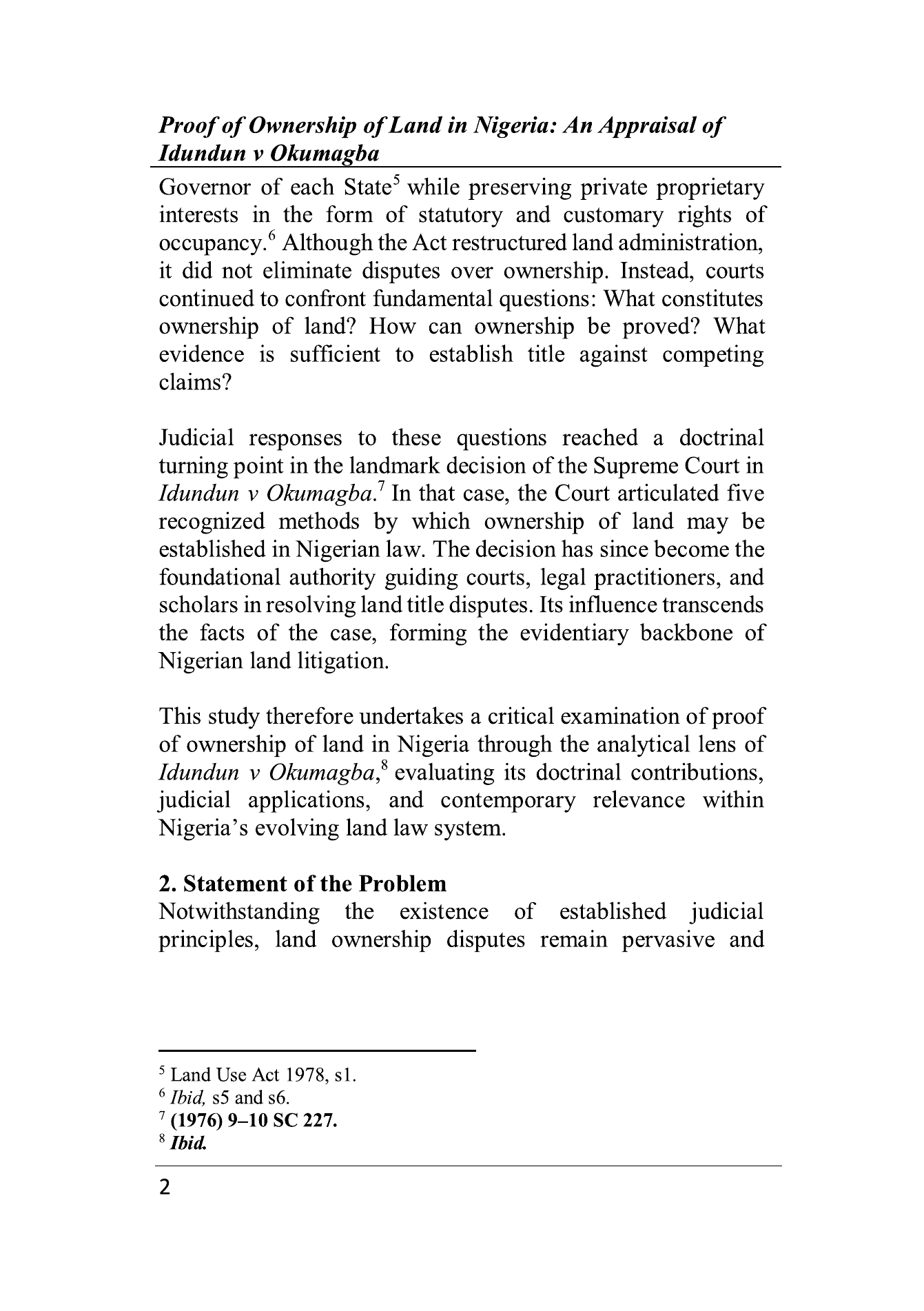
Loading page…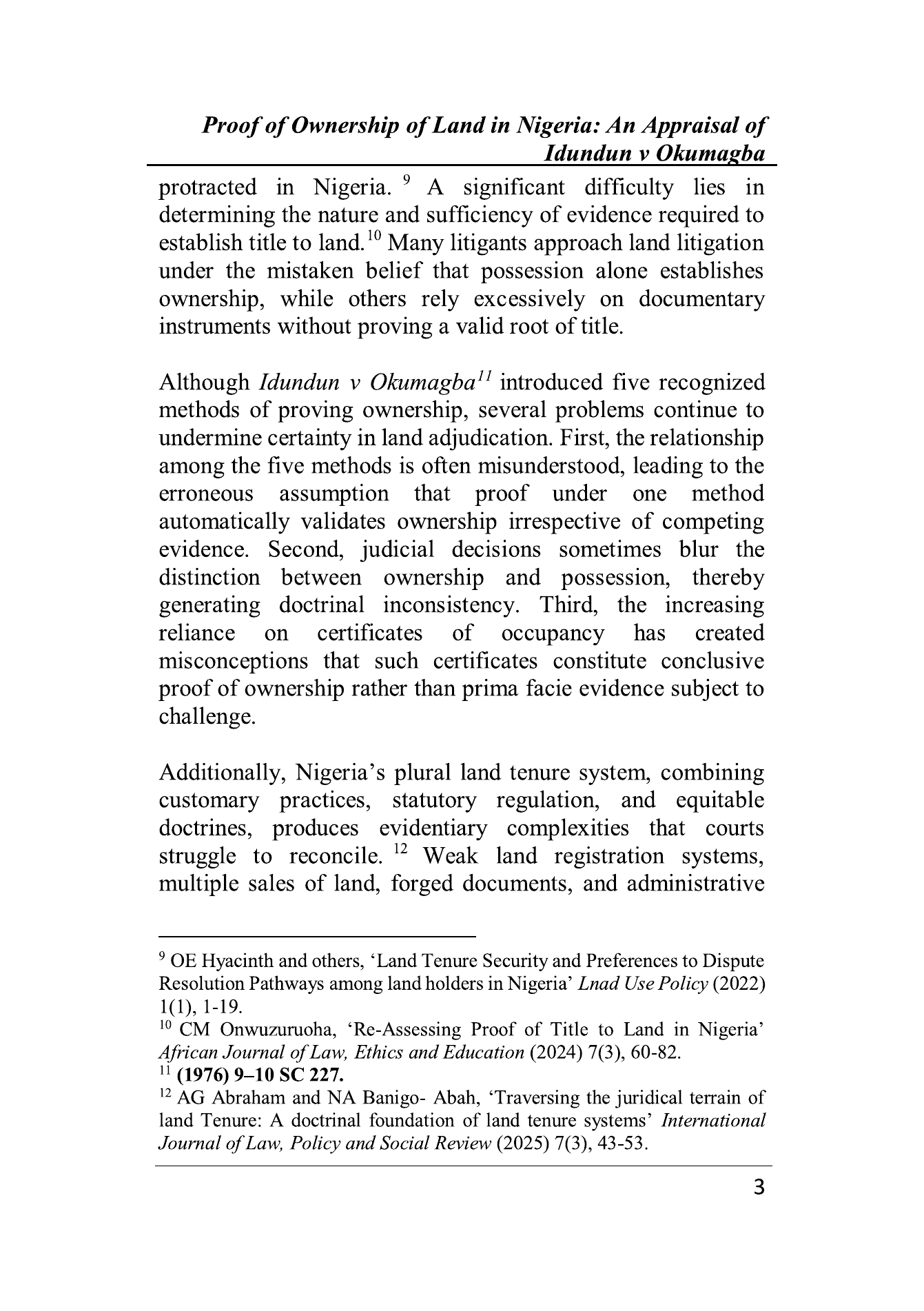
Loading page…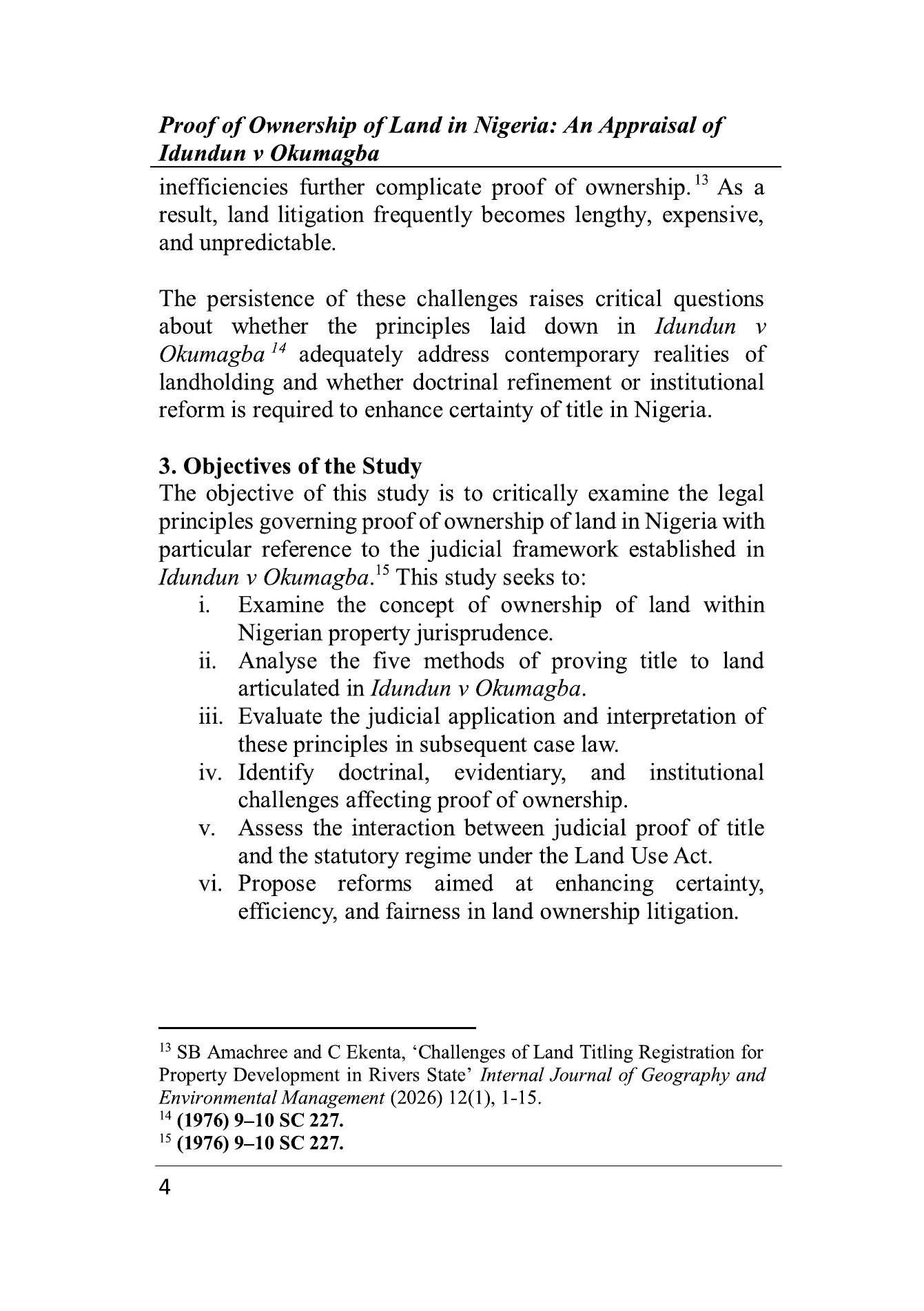
Keep reading
That was the free preview. 28 more pages in the full monograph, yours as a PDF for ₦7,000.