Opening the monograph…
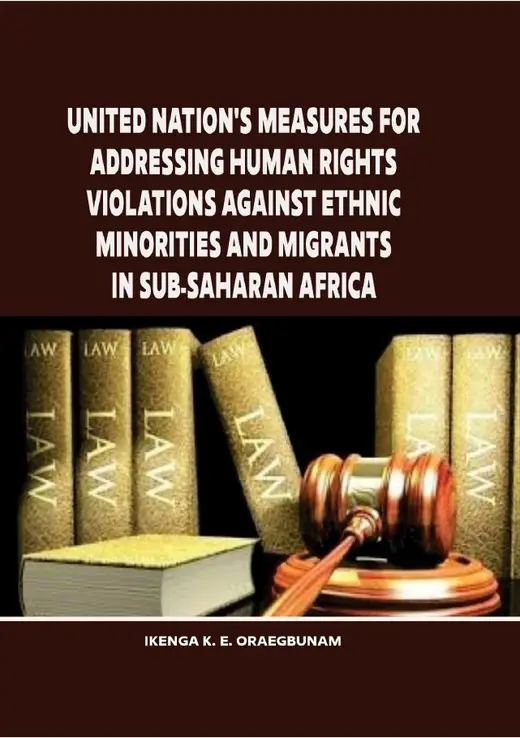
International & Environmental Law
United Nation’s Measures for Addressing Human Rights Violations Against Ethnic Minorities and Migrants in Sub-Saharan Africa
About the monograph
This study critically examines the effectiveness of the United Nations human rights system in protecting ethnic minorities and migrants across SubSaharan Africa. Despite the existence of a comprehensive international legal framework comprising binding treaties, charter-based bodies and treaty monitoring mechanisms, these vulnerable population continues to experience systemic discrimination, xenophobic violence, arbitrary detention, economic marginalisation and widespread impunity for violations committed against them. The central problem identified is the persistent and debilitating gap between the normative aspirations of international human rights law and the lived realities of ethnic minorities and migrants in the region. This implementation gap is attributable to multiple factors such as the structural primacy of state sovereignty that allows governments to engage with UN mechanisms on their own terms, weak domestic legal frameworks that fail to translate international obligations into enforceable rights, chronic underresourcing of the UN human rights system itself and the absence of coherent enforcement mechanisms capable of compelling state compliance. The study evaluates their operational strengths and weaknesses of the foregoing institution and its mechanisms within the Sub-Saharan African context. The findings reveal that while these mechanisms have created valuable normative frameworks, generated authoritative documentation of violations and provided platforms for advocacy, their effectiveness is still fundamentally constrained by limited enforcement power, inconsistent state cooperation and structural capacity deficits. The study concludes on the note that meaningful protection requires a paradigm shift from passive monitoring to proactive engagement, including strengthened partnerships with the African Commission on Human and Peoples' Rights, enhanced investigative capacity, dedicated mandates addressing internal displacement and xenophobia, and deliberate empowerment of civil society actors who serve as the essential bridge between international mechanisms and affected communities.
Cite this book
Ikenga K. E. Oraegbunam, United Nation’s Measures for Addressing Human Rights Violations Against Ethnic Minorities and Migrants in Sub-Saharan Africa (TETFund Academic Publishing Centre, Nnamdi Azikiwe University, 2026), ISBN 978-978-8590-25-5.
Free preview
First 4 pagesLoading page…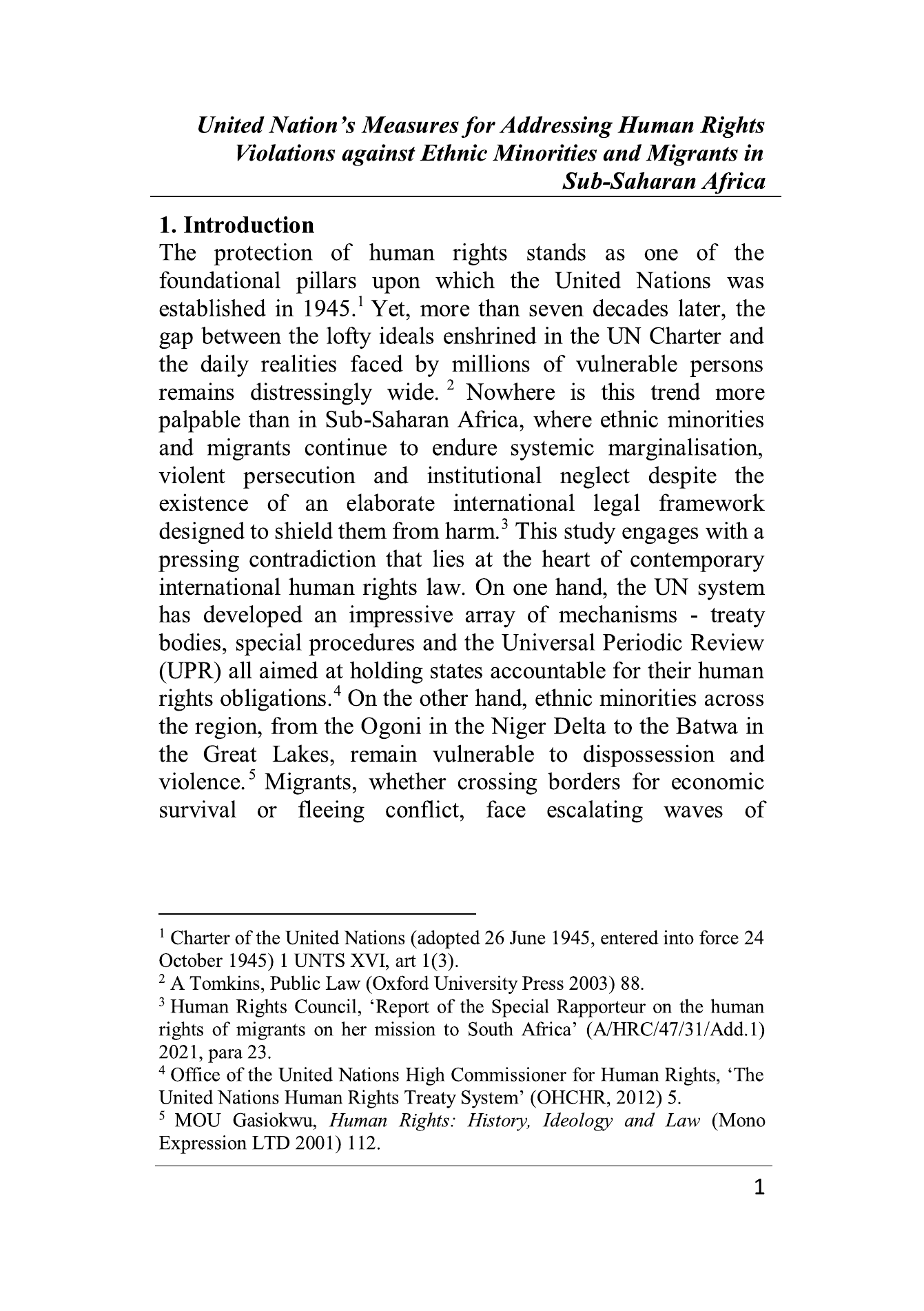
Loading page…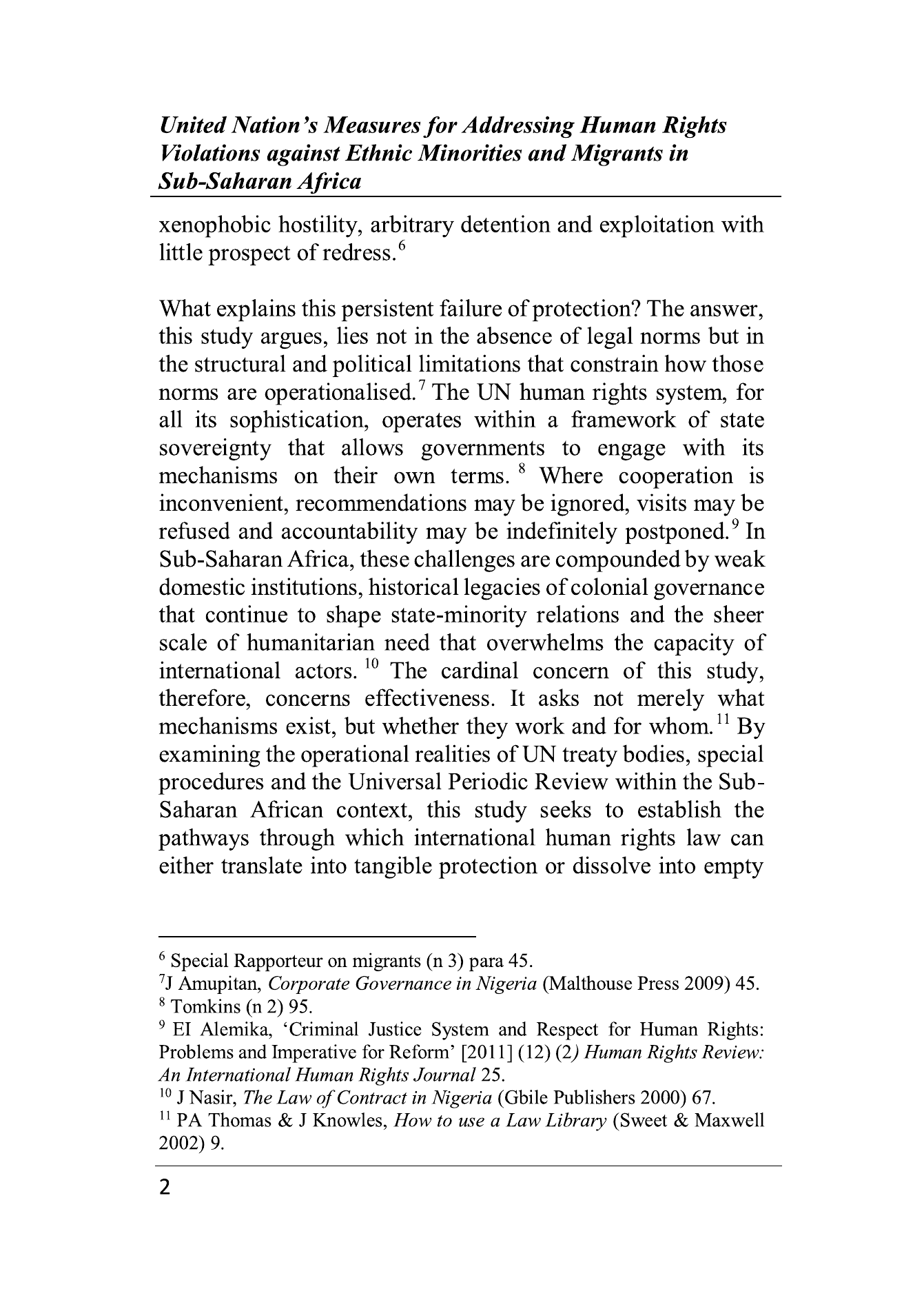
Loading page…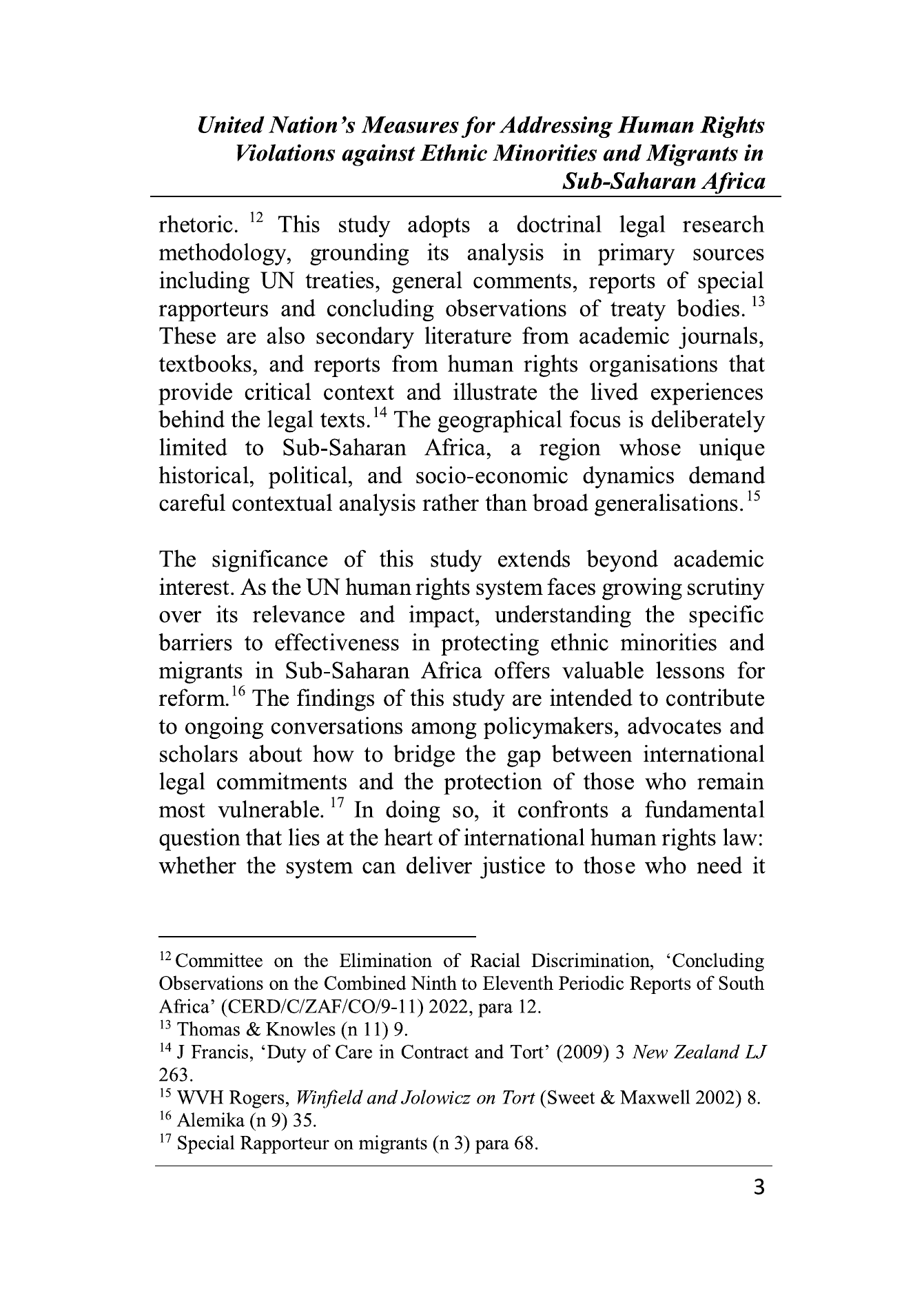
Loading page…
Keep reading
That was the free preview. 31 more pages in the full monograph, yours as a PDF for ₦7,000.