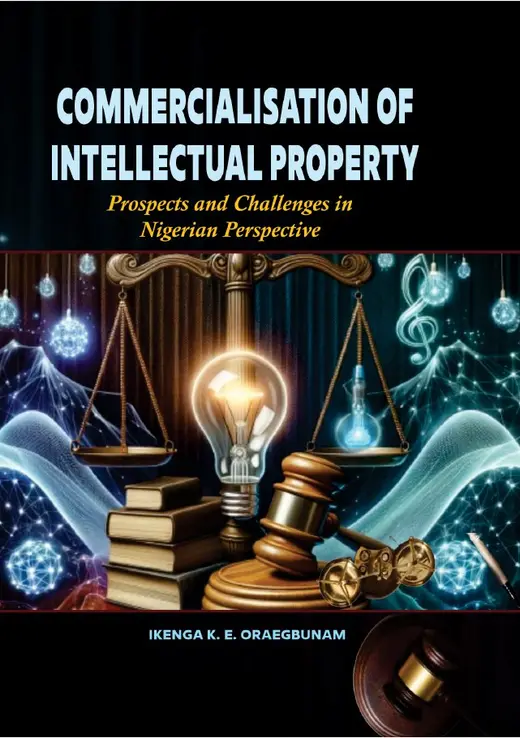
Opening the monograph…
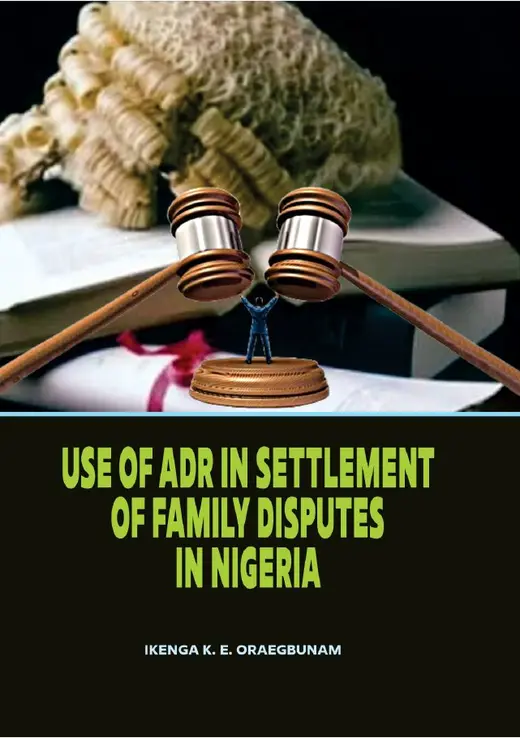
Commercial Law & Arbitration
Use of ADR in Settlement of Family Disputes in Nigeria
About the monograph
Historically, the resolution of family disputes in Nigeria has relied heavily on litigation system. However, this adversarial approach is frequently plagued by severe delays, high financial costs, and a combative nature that often destroys fragile family relationships. As Nigeria's socio-legal landscape evolves, there is an increasing recognition of the need for Alternative Dispute Resolution (ADR) mechanisms, which provide more amicable, confidential, and party-driven methods for resolving domestic conflicts. This study examines the application, legal validity, and socio-cultural acceptability of ADR mechanisms, specifically mediation, conciliation, and arbitration, in settling family disputes within Nigeria's complex, pluralistic legal framework. The study reveals a significant paradigm shift driven by the Arbitration and Mediation Act 2023, which now provides strong statutory backing for the enforcement of mediated settlement agreements in civil and family matters. It is discovered that despite this progress, several critical barriers to effective ADR implementation are still present. These include strict legal limitations on the 'arbitrability' of formal divorce proceedings, the presence of deeply ingrained cultural and gender biases within customary mediation practices, and the glaring lack ofa standalone statutory framework designed exclusively for family ADR. To institutionalize and streamline dispute resolution in Nigerian family law, the study recommends the enactment of a unified, standalone statutory framework tailored specifically to family ADR. Additionally, the government and judiciary must implement targeted reforms to integrate ADR more seamlessly into the family court system, while actively addressing and neutralizing gender biases inherent in customary dispute resolution practices so as to ensure fairness and equity for all parties.
Cite this book
Ikenga K. E. Oraegbunam, Use of ADR in Settlement of Family Disputes in Nigeria (TETFund Academic Publishing Centre, Nnamdi Azikiwe University, 2024), ISBN 978-978-8590-13-2.
Free preview
First 4 pagesLoading page…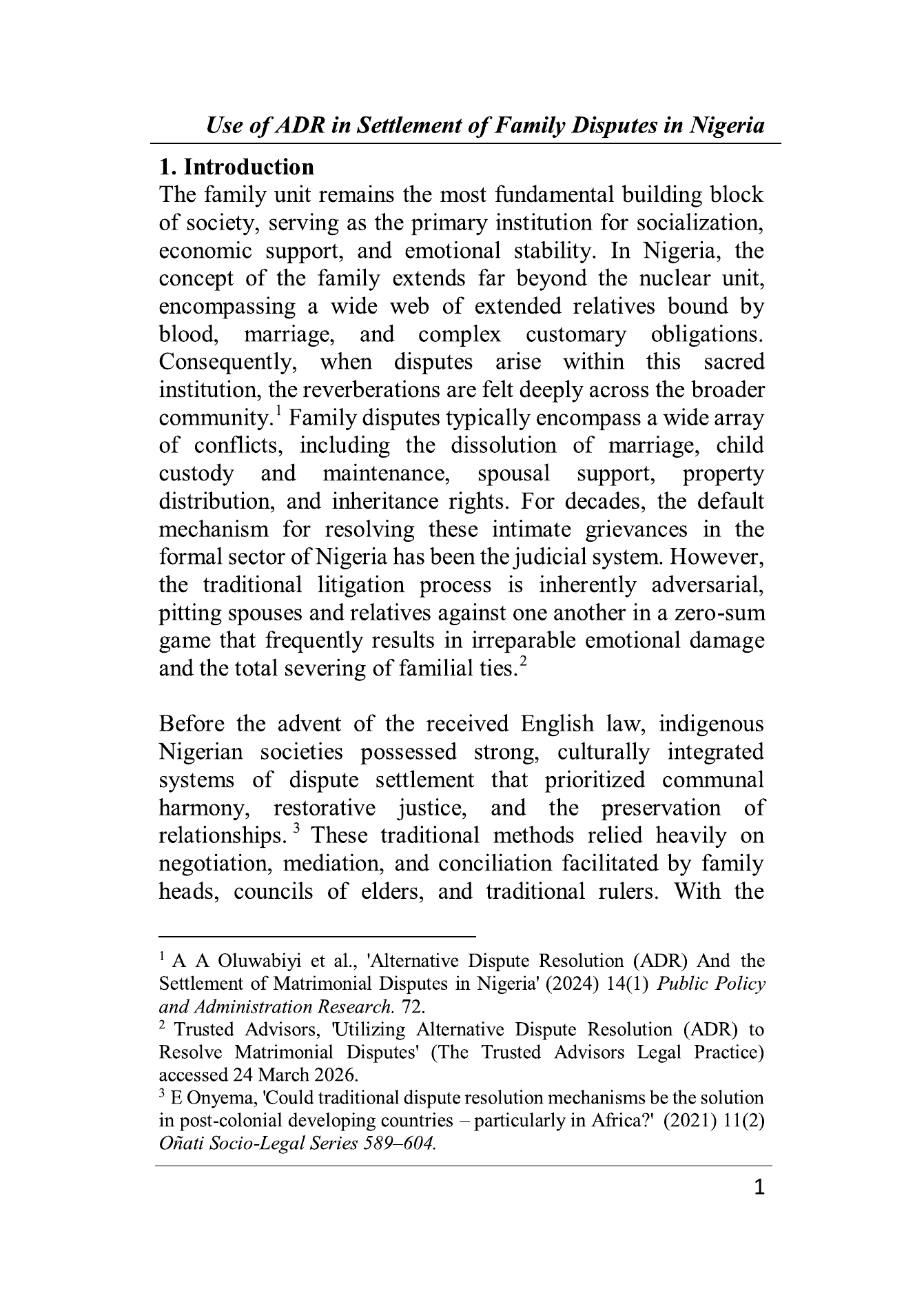
Loading page…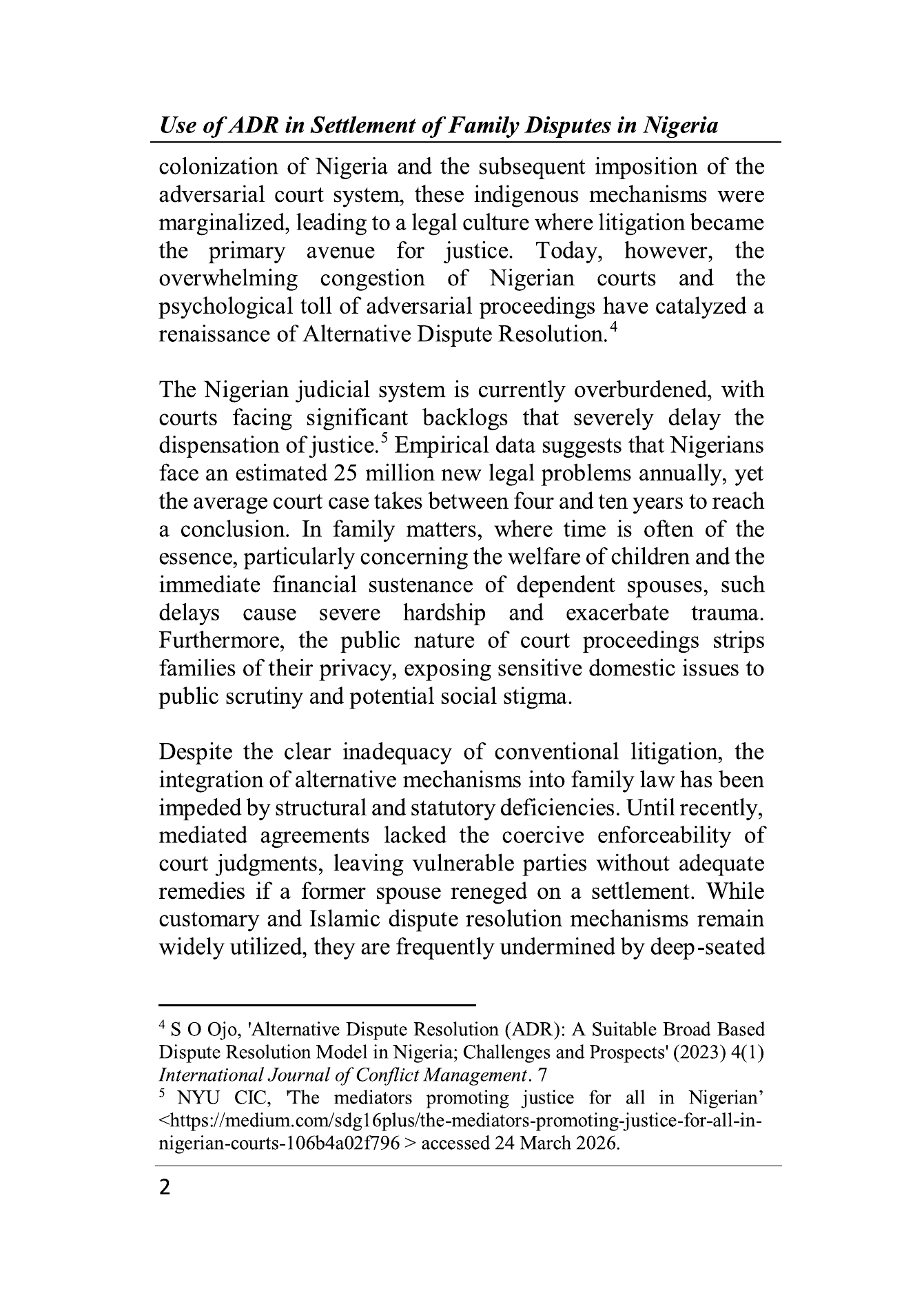
Loading page…
Loading page…
Keep reading
That was the free preview. 27 more pages in the full monograph, yours as a PDF for ₦7,000.